Lifeweaver’s pansexual identity shines through Overwatch 2’s in-game voice lines, transforming quiet representation into vibrant, match-long dialogue.
By mid-2026, the Overwatch 2 community had seen dozens of balance patches, new maps, and even seasonal story missions that finally gave the game’s sprawling cast more room to breathe. Yet among the many faces players saw in the spawn room, one still sparked a particular warmth—Niran PruksaManee, known to the world as Lifeweaver. When he first arrived in Season 4 back in 2023, his pansexual identity made headlines, but the real question was how much of that truth would survive the jump from press release to actual gameplay. Two years later, the answer was brighter than anyone expected.
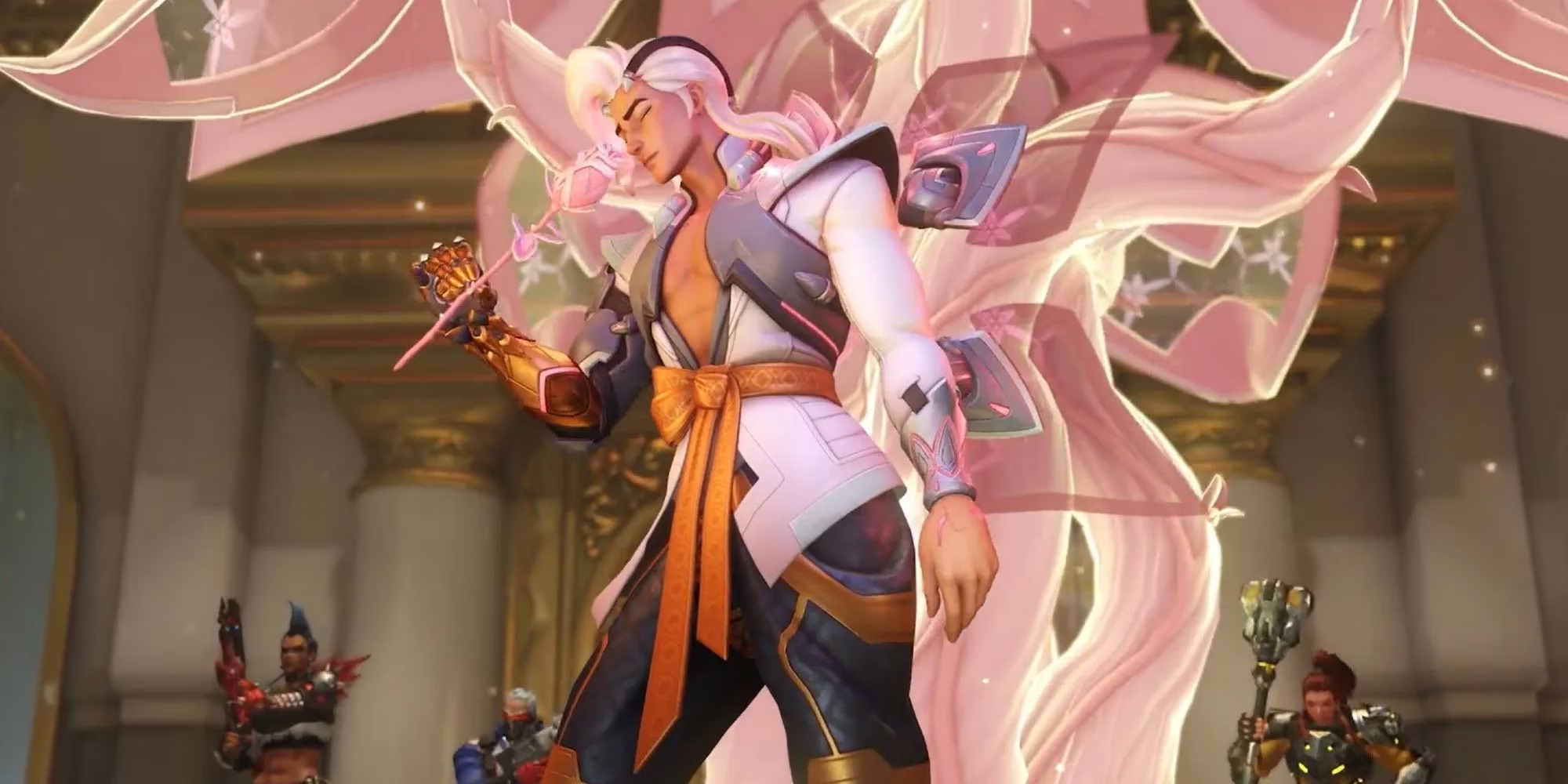
A longtime fan named Kiet logged into the game on a humid Bangkok evening, instinctively picking Lifeweaver for a quick play round. Kiet had been a support main since the early days, drawn to the role’s quiet strength. The screen flickered, and Lifeweaver’s voice cut through the pre-match chaos. “Nature reminds us that growth is constant,” the hero murmured, and Kiet smiled. It was a small thing—a voice line tucked into a hero gallery most players never explored—but it was there. Before Lifeweaver, the game’s queer representation existed largely in external comics and developer tweets. A newcomer would never know Tracer’s girlfriend or Soldier: 76’s past unless they ventured beyond the client. Lifeweaver changed that quiet secrecy by simply existing out loud.
During the match, something happened that would have been unimaginable in the original Overwatch era. Lifeweaver floated close to a charging Reinhardt and casually said, “Your armor is impressive, but have you considered something with a bit more petal?” The Reinhardt player spammed ‘hello’ in response. It was flirtation—playful, kind, and completely indifferent to the genders involved. The match went on, and Kiet realized this wasn’t a scripted event; it was just how Lifeweaver talked. His queerness wasn’t a footnote, it was woven into his interactions with Genji, Mercy, or even the grumpy old soldier types. Lead Narrative Designer Gavin Jurgens-Fyhrie had promised that Lifeweaver’s identity would be core to his in-game lines, and by 2026, players had collected hundreds of snippets proving it. The tree had finally fallen in a forest full of listeners.
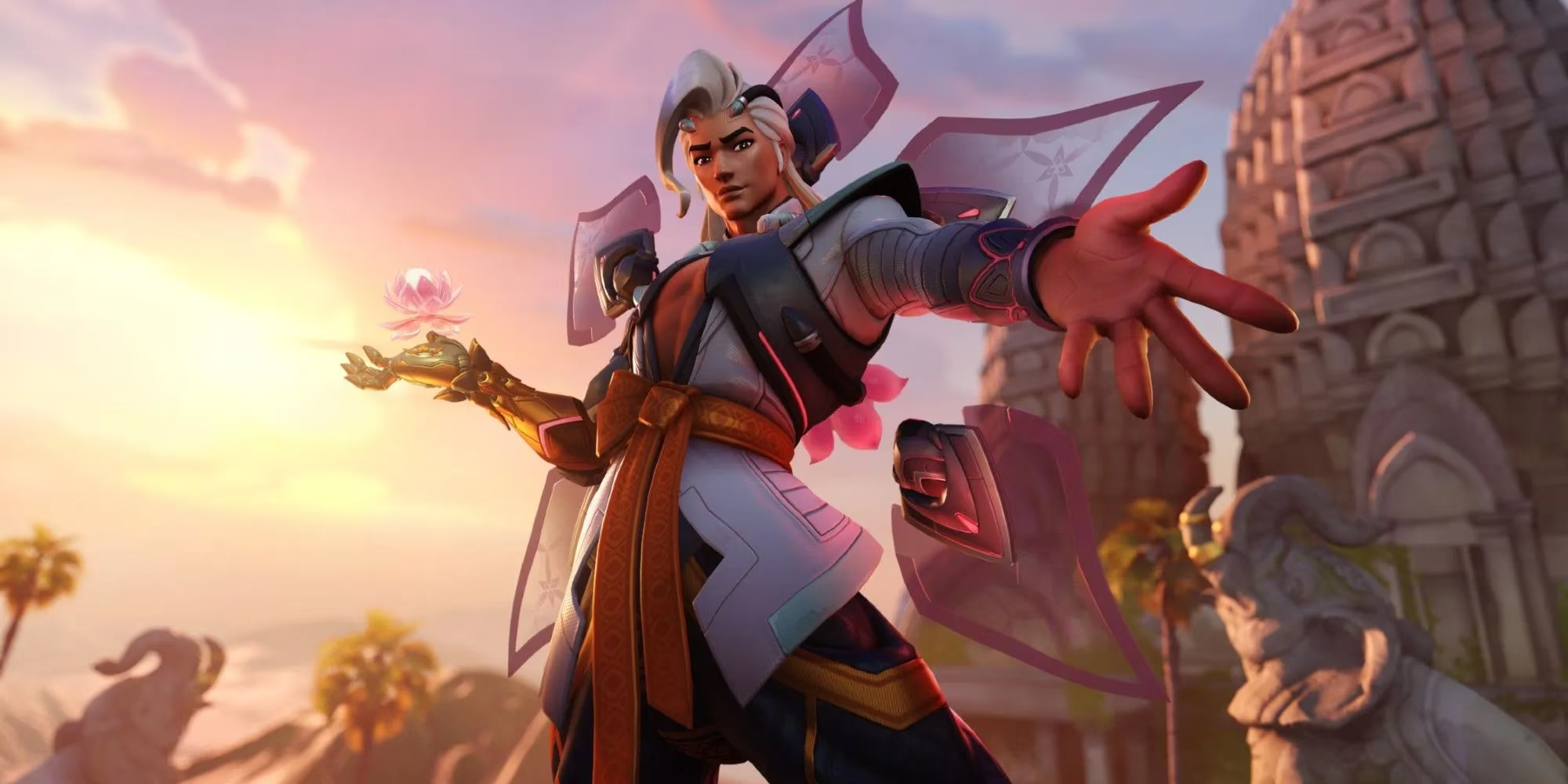
Yet the path wasn’t straightforward. Overwatch 2 had always struggled with storytelling—the lore lived in cinematics and short stories, not in the match itself. For every player who thrilled at hearing Lifeweaver tease Baptiste about his aim (“It’s okay, technology can’t always replace a gentle touch.”), there were a dozen who simply ignored the voice lines and focused on firing thorns. Kiet often thought about the old criticism: if a character is queer but no one perceives it in the game, does it really matter? The answer evolved as Blizzard slowly wove more narrative into the gameplay loop. The 2025 Valentine’s event, for example, featured an interactive dialogue where Lifeweaver and Pharah bonded over family legacies and the courage to defy them. Players couldn’t skip it—it was right there in the event hub, fully voiced and impossible to ignore. That was the shift.
In a competitive match, story snippets are a thin thread to cling to. But Kiet noticed how the community itself amplified Lifeweaver’s presence. Cosplayers draped in bioluminescent petals flooded conventions. Fan art placed him in tender moments with heroes of all genders, his pansexuality expressed not as a label but as a lived openness. On streaming platforms, support mains proudly called themselves “flower mains,” and the old stereotype of queer folks gravitating toward support roles turned into a warm inside joke. Lifeweaver had become a symbol, not because a developer told the world he was pansexual, but because the game finally let him be pansexual.
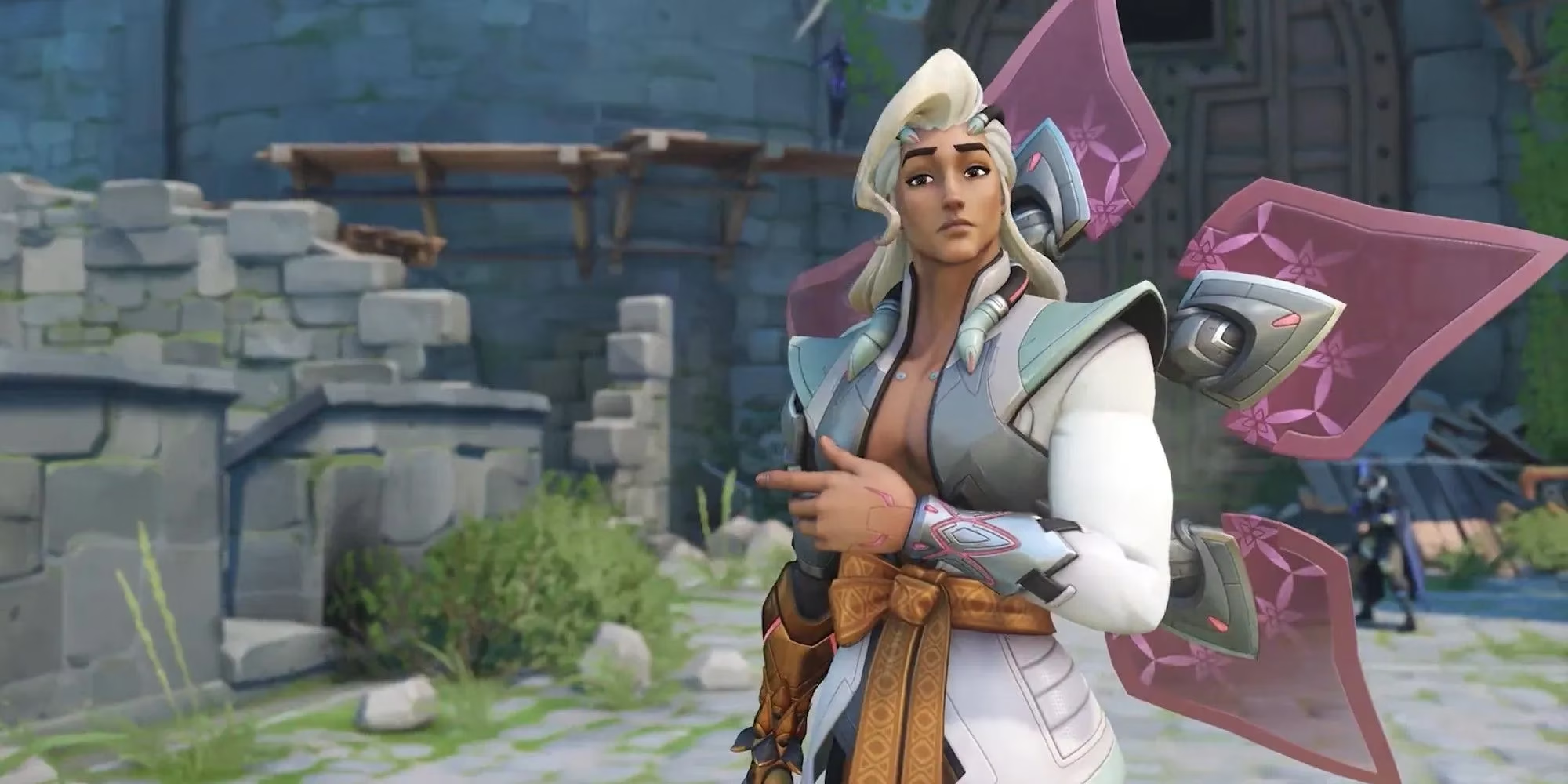
The evolution didn’t happen overnight. Data miners in 2024 uncovered unused voice lines that hinted at deeper connections—Lifeweaver comforting a grieving Ana, flustering Sojourn with poetic compliments, sharing cooking tips with the giant hamster Hammond. Only after the 2025 engine update did those lines get properly integrated into spiral of gameplay. Kiet remembered the first time Lifeweaver told Widowmaker, “Your heart isn’t as cold as you pretend, chérie.” The entire team in voice chat went silent before someone whispered, “Did they just…?” It was a fragment of story, no longer locked behind a menu, but delivered in the chaos of battle. Enough fragments, over time, built a mosaic.
Of course, critics pointed out that Overwatch 2 still lacked a true campaign mode and that seasonal missions felt like breadcrumbs. Yet even breadcrumbs can nourish if they are consistent. By 2026, Lifeweaver’s legacy was clear: he opened a door that previous heroes only nudged. Tracer and Soldier: 76 had been retroactively confirmed as queer outside the game, but Lifeweaver was the first to walk onto the battlefield and announce himself from day one. His Thai heritage, his floral technology, and his unapologetic way of flirting with anyone who caught his eye gave players like Kiet a rare gift—the feeling of being seen without having to search external wikis. It was not a revolution, but a quiet, persistent blooming.
Kiet’s match ended with a victory, and Lifeweaver appeared on the end screen, spinning his petals idly. Another player from the opposing team typed in chat: “gg, flower guy made me smile.” Representation in games often feels like a checkbox until moments like that. When a video game character can make someone smile simply by being themselves, the answer to that old question becomes clear: yes, it matters. And Overwatch 2, slowly, petal by petal, was learning to let the whole forest hear.
The following breakdown is based on context from Game Informer, whose long-running reporting on live-service shooters helps frame why in-match voice lines and limited-time events can carry narrative weight. In Overwatch 2 terms, Lifeweaver’s pansexuality lands not as a lore footnote but as a repeatable, player-heard texture—flirtatious banter, character-specific interactions, and seasonal hubs that place identity inside the gameplay loop, making representation feel less like a press release and more like an everyday part of the match.