Explore Overwatch 2's revolutionary Clash mode, a strategic PvP experience that redefines team-based competition with its intense tug-of-war gameplay and dynamic capture-point mechanics.
As a seasoned professional player, I was thrilled when Overwatch 2's tenth season launched in 2024, bringing with it a trial for the much-anticipated new mode: Clash. This wasn't just another update; it felt like a direct response to the community's long-standing requests for a fresh, strategic team-based experience. Jumping into those initial matches, I could immediately sense Blizzard was testing something with serious competitive potential. The mode promised a return to the tug-of-war intensity many of us loved, but with a new twist. Now, looking ahead to 2026, Clash has evolved from that initial trial into a cornerstone of the game's competitive landscape. How did it get here, and what makes it such a compelling mode for players of all skill levels? Let me break it down from my perspective on the front lines.
What is Clash, Exactly?
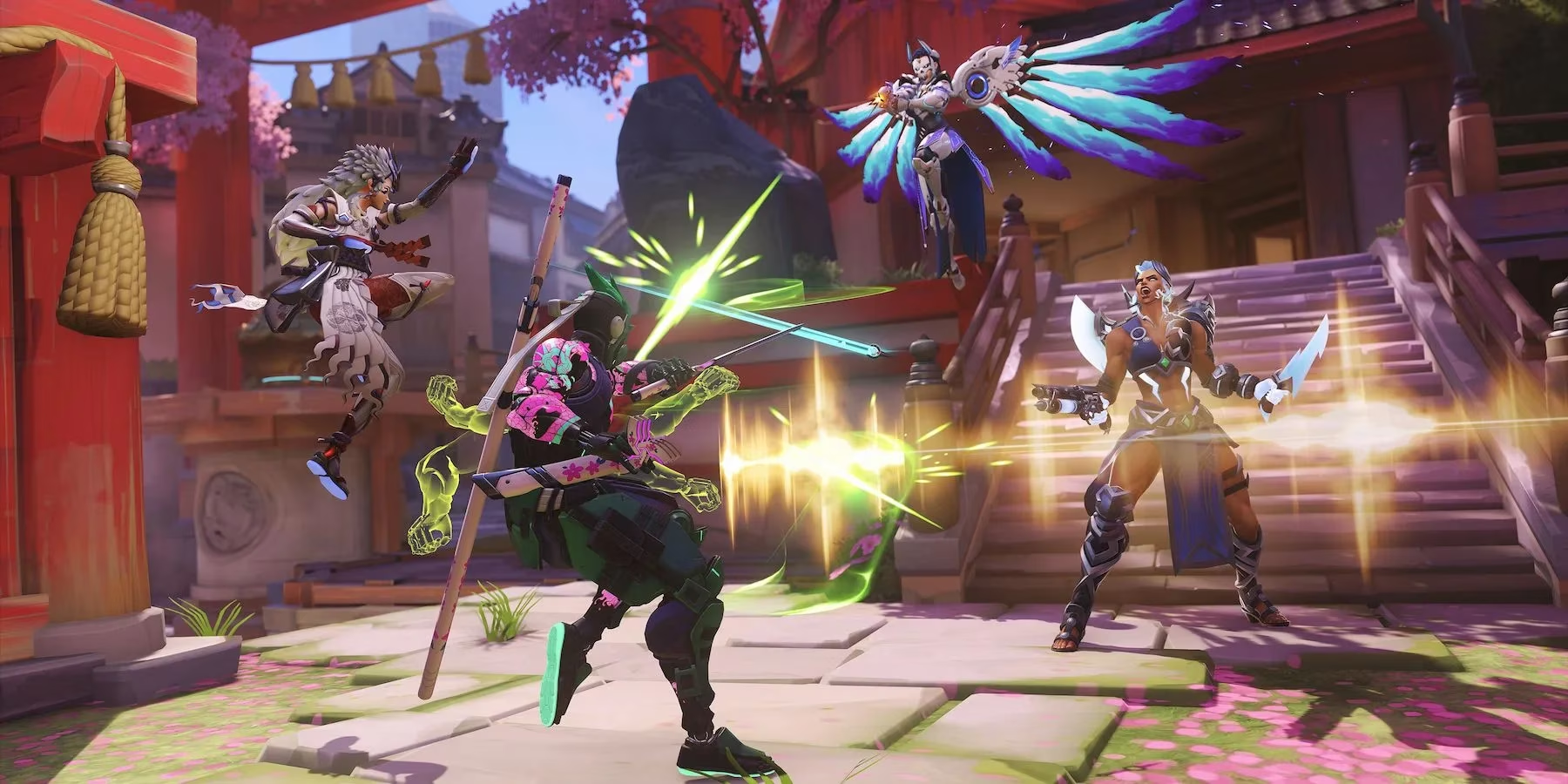
Clash is Overwatch 2's innovative PvP mode that debuted in Season 10. Think of it as a spiritual successor to the classic Assault (2CP) mode, but refined and reimagined for the modern game's pace. Remember the strategic depth of capturing points in a linear fashion? Clash brings that back in spades. The core premise is a symmetrical, point-to-point battle on a mirrored map. There are five capture points laid out in a straight line: A, B, C, D, and E. Each match starts with a tense standoff—your team holds points A and B, the enemy holds D and E, and the central point, C, is neutral and immediately contested. The objective is clear: capture all points or hold more than your opponent when the match timer ends. It's a pure test of map control, team coordination, and momentum.
The Flow of Battle: A Tug-of-War for Control
The genius of Clash lies in its rhythmic, back-and-forth nature. Capturing a point is straightforward: your team needs to stand on it uncontested. But here's the first major strategic layer: after capturing a point, there's a 30-second lockout period before the next point in sequence becomes capturable. This is crucial! This brief cooldown prevents a single, dominant team fight from deciding the entire match. It forces a reset, giving the defending team a precious moment to regroup, set up new defenses, and plan a counter-attack. This creates natural phases of attack and defense for both teams, making every match a dynamic story of momentum swings. One moment you're pushing aggressively towards the enemy spawn, the next you're desperately holding your last point. Have you ever experienced the sheer adrenaline of a full-map comeback? In Clash, it's always a possibility.
Strategy and Team Composition
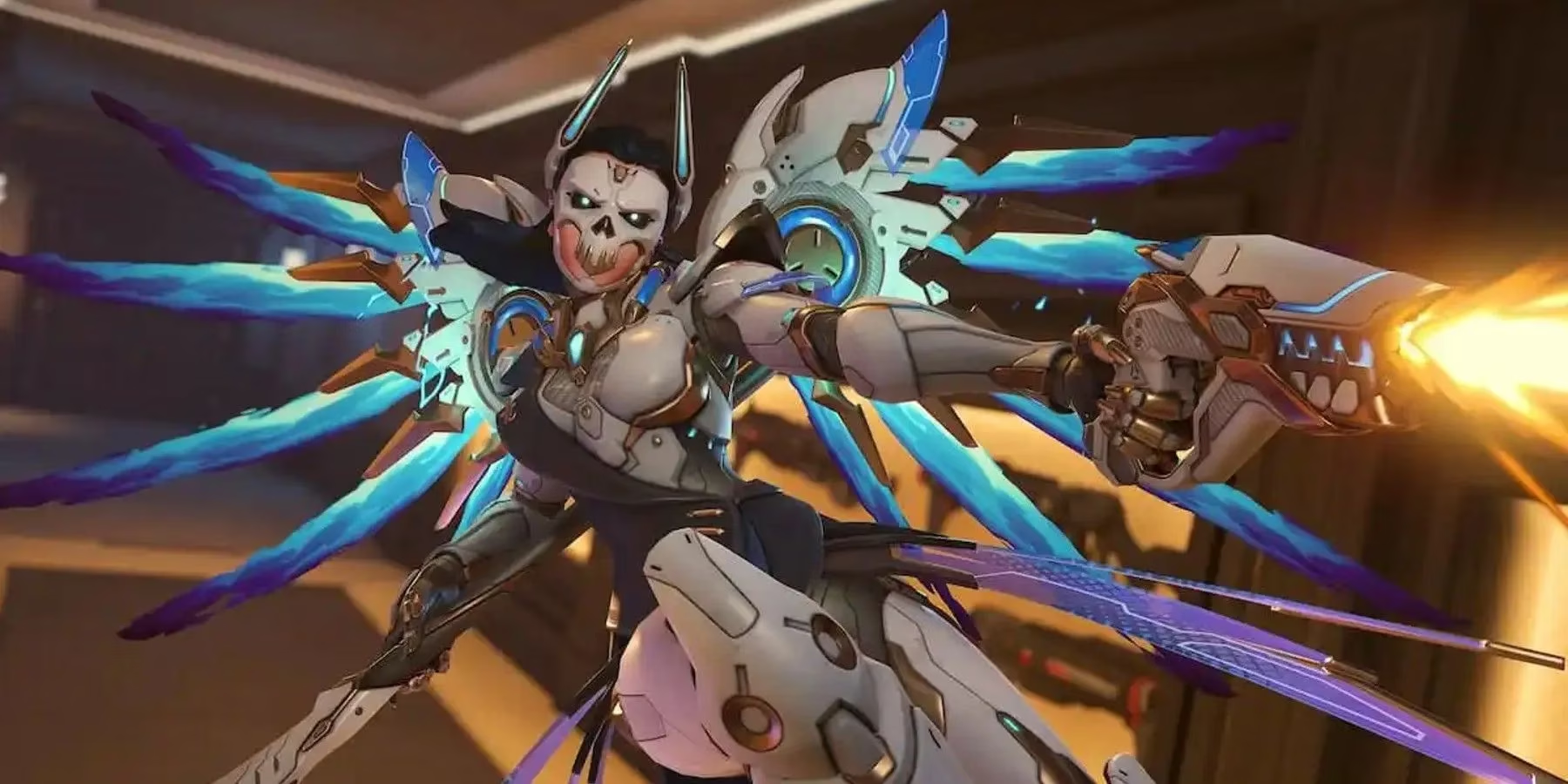
Unlike some modes with strict role queues, Clash has no role restrictions. This freedom is a double-edged sword that separates good teams from great ones. From a pro player's view, a balanced composition is still king, but the linear nature of the maps allows for some creative flexibility.
-
Tanks: Heroes who can control space and initiate fights are invaluable. Think Reinhardt for holding a choke or Wrecking Ball for disrupting the backline during a push. A tank's ability to make space for their team to capture a point is the single most important factor.
-
Damage: Sustained damage and area denial shine here. Heroes like Junkrat, Pharah, or Torbjörn can make capturing a point a living hell for the enemy. Flankers can be powerful, but the linear design means they must be exceptionally good at finding alternative routes.
-
Support: With fights often concentrated on a single point, healers with strong area-of-effect or burst healing are vital. Lucio's speed boost for engaging or disengaging is a game-changer, while a well-timed Transcendence or Sound Barrier can stop an enemy push cold.
The key is understanding that the fight is always moving. You're not just defending a point; you're preparing to attack the next one, or falling back to defend your own. Team-wide ult economy and coordination for those 30-second windows between points are what win games.
The Maps: From Trial to Permanent Fixture
The mode's trial in 2024 was a resounding success, leading to its permanent addition. The initial map, Hanaoka, served as the testing ground. This daytime map set in a Japanese village offered long sightlines and clear flanking routes, perfect for learning the mode's flow. Based on player feedback, adjustments were made to spawn timers and some geometry to balance attack and defense. The real excitement began with the promised second map, Volskaya. Released later in 2024, this industrial, snowy map brought a different feel with more enclosed spaces and verticality around the capture points, challenging teams to adapt their strategies. As of 2026, the Clash map pool has continued to grow, with each new addition offering unique environmental hazards and layouts that keep the meta fresh. Isn't it amazing how a mode's viability hinges on its map design?
The Evolution and Future of Clash
Looking back from 2026, Clash's journey from a seasonal trial to a ranked and professional play staple is a testament to its solid design. It successfully filled the strategic gap left by the removal of Assault, providing a focused, objective-based experience that rewards teamwork over individual mechanical skill alone. The mode has seen subtle but important tweaks over the seasons:
-
Spawn Timer Adjustments: Fine-tuned to punish over-extending without making comebacks impossible.
-
Point Capture Time: Slightly modified based on data to ensure matches have a good pace.
-
Competitive Integration: It now features its own dedicated queue and map rotations in Competitive Play.
The development team has shown a consistent commitment to the mode, using community feedback—from casual players and pros alike—to polish it into one of Overwatch 2's most reliable and engaging formats. Its clear rules and intense back-and-forth make it incredibly viewer-friendly for esports, which has cemented its place in tournaments.
Final Thoughts from the Arena
As someone who plays this game for a living, Clash represents the kind of content that keeps Overwatch 2 exciting. It's a mode that demands constant communication, strategic hero swaps, and masterful ult management. It's not just about clicking heads; it's about controlling space and time. The 30-second lockout mechanic is a stroke of brilliance, creating natural pauses for strategic breathers and dramatic turnarounds. From its humble beginnings as a Season 10 trial to its current status as a competitive pillar, Clash has proven its worth. For any player looking to improve their game sense and teamwork, there's no better training ground. So, what are you waiting for? Dive into the fray, experience the tug-of-war, and maybe I'll see you on the point—just try not to be on the opposing team!