Overwatch 2 uses Sojourn's 'Calling' animated short as a blueprint for story missions, turning a cliffhanger into a recurring narrative strategy.
As a dedicated Overwatch 2 player and lore enthusiast, I've always looked forward to the animated shorts that Blizzard occasionally drops. Back in 2023, I vividly remember the buzz when Sojourn’s “Calling” short landed. It wasn't just a beautifully produced piece of character development—it ended on a cliffhanger that directly teased the upcoming Invasion story missions. Now, in 2026, that same blueprint has become the centerpiece of how Blizzard expands the Overwatch universe. What started as a first-of-its-kind experiment has evolved into a recurring narrative strategy, and I can't help but feel excited about where things are headed next.
The Short That Changed Everything
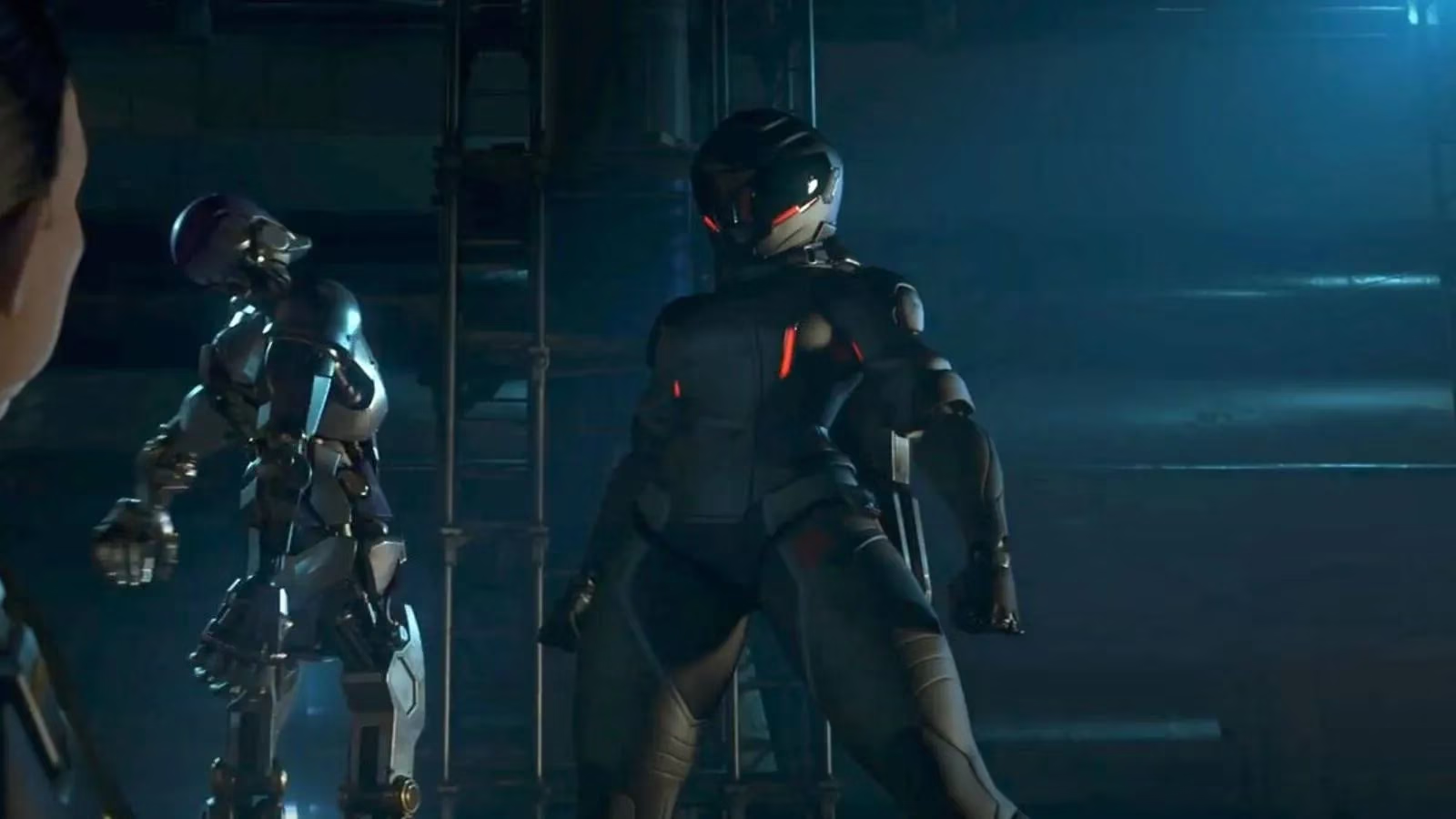
Historically, Overwatch animated shorts were self-contained stories. They either showcased a modern-day skirmish or delved into a hero’s origin, and any unresolved threads were usually picked up in comics or external media. Sombra’s “Infiltration” short, for instance, teased a confrontation with Zarya that later unfolded in a comic book. But Sojourn’s “Calling” broke that mold in two significant ways. Not only did it end with a genuine cliffhanger—her city under attack by Null Sector omnics during Ramattra’s uprising—but it also set up playable content. That immediate bridge between cinematic and gameplay was something the series had never done before.
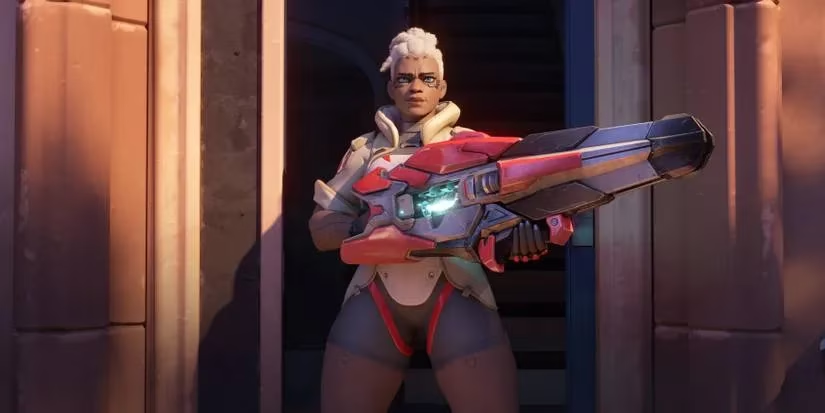
The short itself is a masterclass in dual-identity storytelling. On the surface, we see Vivian Chase enjoying her retirement: baking croissants, spending time with her adorable dog Murphy, and lounging in a cozy sweater. By night, she transforms into a vigilante, donning a rugged biker getup to protect Canadian citizens from corrupt omnics. The plot cleverly questions whether an agent should arrest her, ultimately deciding against it, but the real hook comes in the final moments. Giant Null Sector ships descend on Toronto, and Sojourn grabs her railgun to head into battle. That ending directly led players into the Toronto story mission, making us feel like we were stepping right out of the cinematic and into the action.
From Experiment to Established Pattern
Back in 2023, the Overwatch 2 PvE vision had already shrunk dramatically, disappointing many fans. Yet, the integration of animated shorts with story missions proved to be a silver lining. It gave the narrative a new playground—one where cinematics could serve as prologues to interactive chapters. At the time, I wrote about how this could “kill two birds with one stone” by promoting new heroes and story arcs simultaneously. Now, three years later, the pattern is unmistakable.
Since Sojourn’s debut, Blizzard has released three more major batches of story missions. Each batch was preceded by an animated short that set the stage. For example, the second batch focused on Pharah’s solo mission in Cairo, and we got a short showing her returning to Helix Security International after a long absence. The third batch centered on Zenyatta and Genji’s reunion in Nepal, with a poignant short that explored the Shambali monastery’s past. The most recent batch, released earlier this year, gave us a Illari short that delved into her Sunstrike testing facility, immediately launching us into a mission to contain a solar flare catastrophe. In every case, the television-quality animation acts as a hype builder and narrative anchor. We’re no longer just downloading a content patch—we’re continuing a story we were emotionally invested in from the opening seconds.
Why This Approach Works So Well
There’s something uniquely immersive about watching a cinematic and then, minutes later, controlling the hero in that very location. When I played through the Toronto mission after watching “Calling,” I could still picture Sojourn’s quiet determination from the short. The environment felt alive because I had seen it through her eyes. This synergy between short and gameplay also allows Blizzard to tell longer, more complex character arcs. A 7-minute short can introduce a conflict, a 30-minute mission can escalate it, and the next short can show the aftermath. It’s serialized storytelling done right.
The approach also revitalizes the lore for veteran players. Instead of waiting months for a comic or a developer update, we know that the next batch of missions will likely be accompanied by a short that advances the global narrative. Importantly, it doesn’t replace the origin-story shorts for new heroes—those still release and remain popular—but it complements them with a new layer of connectivity. Blizzard has essentially built an animation-to-gameplay pipeline that keeps the community theorizing and speculating.
Not Every Short Needs to Be a Cliffhanger
One lesson Blizzard seems to have learned is that not every short needs a direct cliffhanger. The Pharah short, for instance, ended with her boarding a transport, and then the mission began at her destination. The Illari short ended with a distress signal, but the tone was more of a call to action than a suspenseful break. This flexibility prevents fatigue and allows the team to craft appropriate emotional beats. Still, the overarching formula—short → story mission—remains intact, and it’s clearly working. Player engagement with the story missions spikes right after a short drops, and the discussions on social media echo the excitement of a TV series premiere.
Of course, there are challenges. The wait between story mission batches remains long; we’ve been getting roughly one batch per year. Some fans argue that the narrative momentum fizzles out during the wait, and that the missions themselves could be meatier. Blizzard has improved the replayability with modifier systems and higher difficulty tiers, but the core longing for more frequent narrative content persists.
What I Hope to See Next
Looking ahead, I’d love for Blizzard to expand this model to include smaller-scale animated vignettes that set up hero mastery missions or seasonal events. Imagine a 2-minute short for a Lunar New Year event that shows Mei visiting family, then a playable PvE sequence where you defend a parade. The framework is already there. The community has also been vocal about wanting shorts that tie into the competitive map rotations—for example, a short about King’s Row before a new Push map variant arrives.
For now, I’m just grateful that the “Calling” experiment wasn’t a one-off. It proved that Overwatch’s storytelling could evolve beyond disconnected vignettes into a living, breathing serial. If Blizzard continues down this path, the line between watching and playing will blur even further, making us feel like we’re not just fans of the heroes, but active participants in their world. And that’s exactly where Overwatch 2 should be in 2026.
Overwatch 2 is available now on PC, PS4, PS5, Switch, Xbox One, and Xbox Series X.