Marvel Rivals, the new hero shooter, presents a thrilling alternative to Overwatch 2 by leveraging Marvel's iconic universe and narrative depth. Its potential for robust PvE content could captivate players seeking a richer team-based experience.
As I watched the announcement trailer for Marvel Rivals, a wave of excitement washed over me—this was the game Marvel fans had been dreaming of for years. The vibrant visuals, the iconic heroes and villains clashing in dynamic battles, it all felt instantly familiar yet thrillingly new. The trailer showcased teams of six players, each controlling beloved Marvel characters, strategizing and combining their unique abilities to secure objectives. The immediate comparison to established titles like Overwatch 2 was inevitable; the core loop of team-based hero combat seemed directly inspired. Yet, as a longtime follower of both the gaming and comic book worlds, I sensed this was more than a simple clone. With Overwatch 2's recent struggles, particularly the uncertainty surrounding its promised Player versus Environment (PvE) narrative content, the timing for Marvel Rivals feels almost prophetic. The gaming landscape in 2026 is ripe for a new champion in the hero shooter arena, and Marvel's vast universe might just provide the perfect foundation.
🔥 Seizing the Moment in a Shifting Market
The controversies and development challenges that have shadowed Overwatch 2 in recent years have left a palpable void in the community. Rumors of canceled PvE modes and shifting developer priorities at Blizzard have created a segment of players hungry for a consistent, narrative-driven experience within a team-based shooter. This is where Marvel Rivals, developed by NetEase Games, has a golden opportunity. The Marvel franchise isn't just a collection of characters; it's a decades-deep wellspring of stories, conflicts, and emotional arcs. If NetEase can successfully integrate a robust PvE component—something Overwatch 2 has famously struggled to deliver—it could capture the hearts of players who crave more than just competitive matches. Avoiding the communication lapses and protracted development cycles that plagued its predecessor could be the key to Marvel Rivals' ascendancy.
📚 A Universe of Untold Stories
What truly sets Marvel Rivals apart is the sheer narrative potential at its fingertips. The Marvel Cinematic Universe has only scratched the surface of the lore contained within over 30,000 comics published since 1961. This gives the developers an almost limitless catalog of material to adapt into engaging PvE missions. Imagine cooperative story campaigns where you and your friends aren't just fighting other players, but battling through iconic comic book events:
-
Secret Wars: Defending Battleworld against incursions.
-
Infinity Gauntlet: Working together to thwart Thanos's universe-altering plans.
-
Dark Phoenix Saga: Containing the cosmic threat of the Phoenix Force.
The game has already shown a willingness to dig deep, featuring lesser-known characters like Galacta, Daughter of Galactus, and the K-Pop superhero Luna Snow. This suggests a commitment to exploring the full breadth of the Marvel tapestry, not just its most famous faces. A well-crafted PvE mode could serve a dual purpose: attracting cooperative gameplay enthusiasts and offering dedicated fans unprecedented immersion into Marvel lore.
⚔️ The Promise of PvP and the Potential of PvE
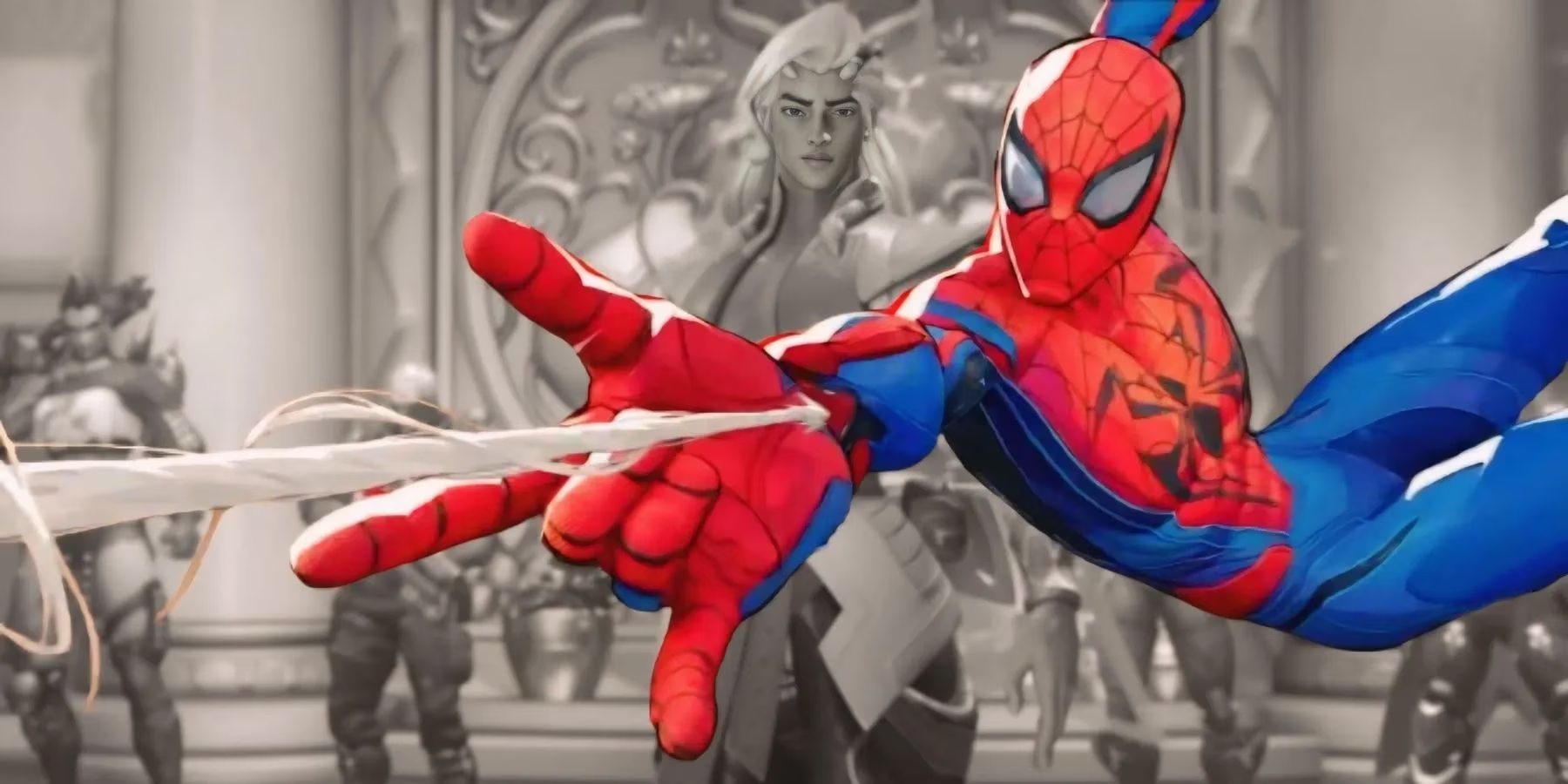
The initial focus for Marvel Rivals is undoubtedly its Player versus Player (PvP) combat. The trailer promised fast-paced, ability-driven clashes that will test teamwork and skill. The core appeal is clear: mastering Iron Man's repulsor blasts, coordinating with a Spider-Man who webs up enemies, or unleashing the Hulk's devastating power. This PvP foundation is essential and will likely be the backbone of the game's competitive scene upon its release.
However, the long-term vision could be what cements its legacy. Introducing a PvE mode post-launch could be a masterstroke, offering a "breath of fresh air" and significantly expanding the game's lifespan and appeal. Here’s a speculative look at what a potential PvE structure could entail:
| Feature | Potential in Marvel Rivals | Benefit to Players |
|---|---|---|
| Story Campaigns | Chapter-based missions following original or adapted comic arcs. | Provides narrative depth and context for battles. |
| Hero Missions | Character-specific missions that explore backstories and unlock unique cosmetics/abilities. | Rewards mastery and deepens connection to favorite heroes. |
| Co-op Horde Modes | Defending points against waves of enemies (e.g., Ultron drones, Chitauri armies). | Encourages teamwork and tests endurance in a less stressful environment than PvP. |
| Boss Raids | Epic, multi-stage battles against major villains like Doctor Doom or Apocalypse. | Offers high-skill cooperative challenges and prestigious rewards. |
👀 Looking Ahead: The Closed Alpha and Beyond
All eyes are now on the upcoming Closed Alpha Test. This initial hands-on period will be crucial in revealing NetEase's vision. Will we see the early framework for PvE content, or will the focus remain solely on polishing the PvP experience? The test will answer critical questions about gameplay feel, character balance, and most importantly, the developer's roadmap. In 2026, player expectations for live-service games are higher than ever; transparency and a clear content pipeline are non-negotiable.
As a fan, my hope is that Marvel Rivals learns from the missteps of its spiritual predecessors. It has the IP, the timing, and the potential to deliver a holistic hero-shooter experience that satisfies both the competitive warrior and the story-loving comic book enthusiast within me. If NetEase Games can successfully marry the exhilarating chaos of Marvel team fights with the rich, cooperative storytelling the universe is famous for, they won't just be creating a successful game—they might be defining the next evolution of the entire genre. The battle for the hero-shooter crown is on, and Marvel is finally throwing its vibranium shield into the ring.