Experience the Overwatch 2 competitive update and Champions overhaul—dynamic SR tracking and no more skill rank grouping restrictions redefine the climb.
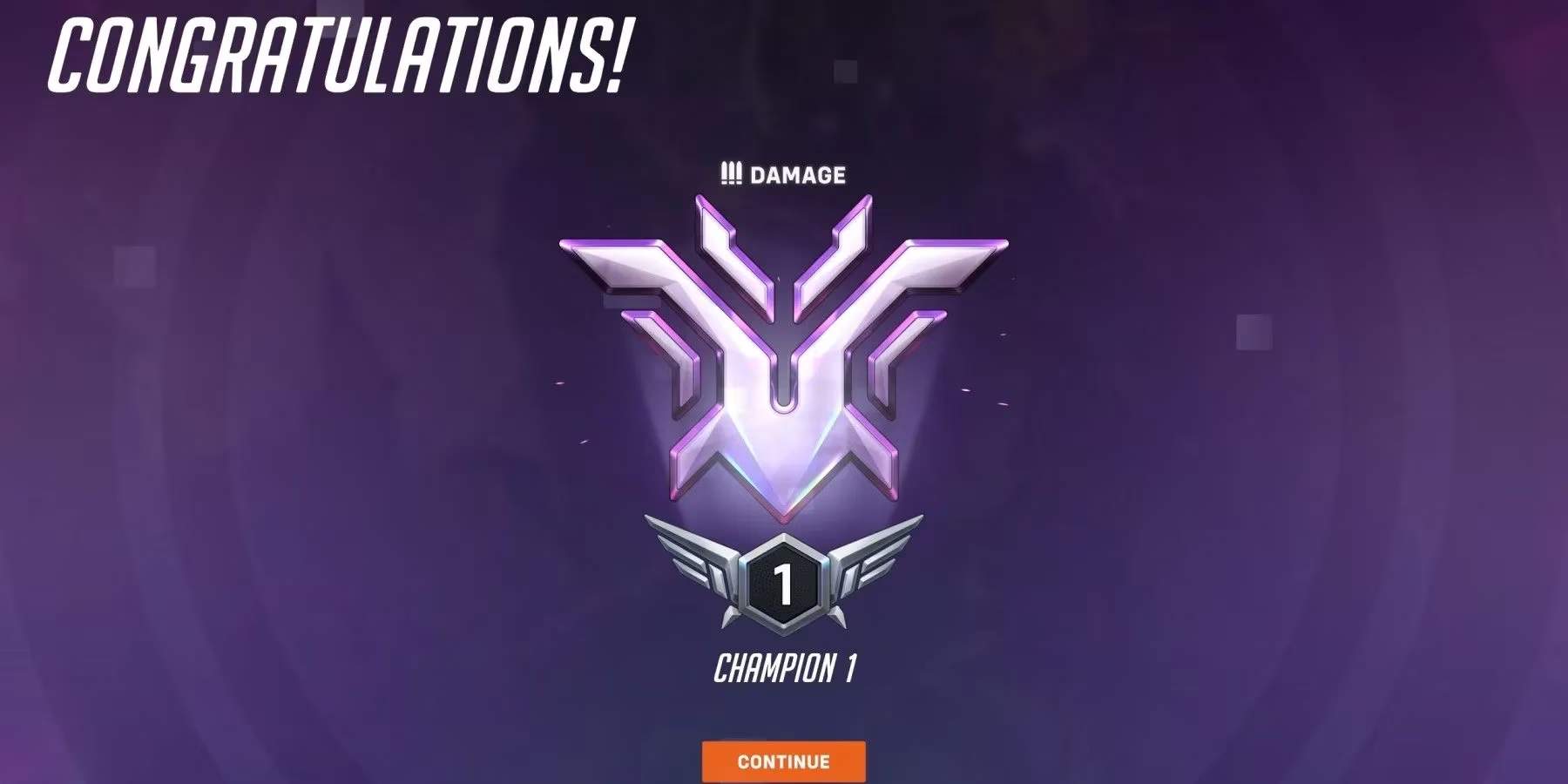
As I log in, the familiar hum of the menu greets me, but the landscape of competition feels palpably different. It's 2026, and the echoes of the monumental Season 9 'Champions' overhaul still resonate through every match I play. I remember the day my rank was reset, a blank slate that promised a new beginning. Now, after every grueling match, I don't just see a victory or defeat screen; I witness the intricate dance of my Skill Rating (SR), a detailed story of my triumphs and fumbles. It's no longer a mystery box opened every seven wins—it's a living, breathing testament to my journey. The climb to the new pinnacle, the Champion rank, looms above Grandmaster like a distant, gleaming peak, and the allure of Jade weapons for the most dedicated warriors adds a tangible, prestigious goal to the grind. The competitive spirit, it seems, has been reborn.
The New Social Fabric of Competition
The most profound change, the one that truly warms my gamer heart, is the dismantling of the old barriers. Remember the frustration when you couldn't queue with your buddy just because the SR gods deemed your ranks too far apart? Gone. Poof! Like a discordant ultimate eaten by a D.Va matrix. Overwatch 2 has torn down those grouping restrictions based on skill rank. Now, I can finally team up with my newer friends who are just starting their climb, and my veteran pals who are dancing in the higher tiers. It's about camaraderie, about sharing the experience, win or lose. No more "sorry, the game won't let us play together." It's a game-changer, literally and figuratively.
Of course, the developers aren't just throwing us to the wolves. There's a brilliant, almost poetic balance to this newfound freedom. The matchmaking system has evolved with a simple, elegant rule:
-
Wide Groups (teams with a large skill range) will only face other Wide Groups.
-
Narrow Groups (teams with similar skill levels) will strictly battle other Narrow Groups.
This isn't just a tweak; it's a philosophy. It ensures that my chaotic, laughter-filled stack with mixed skills isn't brutally stomped by a perfectly tuned, top-500 death squad. Instead, we face others on a similar, wonderfully messy adventure. It preserves the integrity of the sweatier, try-hard matches while opening the doors for social play. It's the best of both worlds, and honestly? It's about time.
A Clearer Mirror: The Competitive Progress Screen
My post-match ritual has been transformed. The Competitive Progress screen is now my command center, my war room. The new features are like tools laid out for a strategist:
| New Feature | What It Means For Me |
|---|---|
| Match History | No more relying on memory or third-party sites! I can revisit my last 10 matches, analyze compositions, and see where things went right or oh-so-wrong. |
| The Scorecard | A detailed breakdown of my performance beyond just medals. It's a personal report card that tells me, "Hey, your healing was on point, but maybe watch those risky flank attempts, pal." |
| Role-Specific Titles | Finally, recognition for my main! Unlocking titles that showcase my prowess as a dedicated Tank or a slippery Support feels incredibly rewarding. It's not just "Player," it's "Vanguard" or "Mender." |
| Scoreboard Rank Range | At a glance, I can see the approximate skill range of everyone in the match. It adds context to the battle and manages expectations. Seeing a wide range? Ah, it's one of those fun, unpredictable matches. |
These aren't just UI additions; they're empowerment. They turn the vague feeling of "I'm improving" into a concrete narrative I can follow and learn from.
The Proof is in the Play: A Mode Reborn
Game Director Aaron Keller wasn't just blowing smoke. The data speaks volumes. Since Season 9, Competitive Play now makes up a whopping 45% of all gameplay hours, a massive jump from the 35% it held before. Let that sink in. For the first time in Overwatch 2's history, Competitive is more popular than Quick Play. That's huge! And Keller was quick to clarify—it's not that people abandoned the casual mode. Oh no. It's that a tidal wave of players, maybe folks like me who were once intimidated, have been drawn into the competitive fray. The revamped system feels more transparent, more rewarding, and frankly, more fair. It's less of a grind and more of a journey.
Beyond the Ranked Ladder: A Faster-Paced World
The competitive love isn't confined to the ranked tab. The entire ecosystem is getting a shot of adrenaline. The world of Overwatch 2 is speeding up:
-
Push maps will feature faster robots and shorter game times. No more drawn-out stalemates!
-
Flashpoint and the defender setup phases on Hybrid and Escort maps are receiving a global speed boost.
These changes promise to tighten the action, reduce downtime, and keep the heart-pounding momentum going. It's all about maintaining that peak engagement, ensuring every second in-game is charged with potential.
The Horizon: More to Come
The tease doesn't end with Season 10. Keller hinted at a "small set of Top 500 improvements" waiting in the wings, likely arriving after the upcoming season. The very summit of the competitive mountain is getting its own makeover, ensuring that the most elite players have a system worthy of their skill.
As I sit here, reflecting on the path from Season 9 to now, I feel a sense of ownership over my competitive experience that I never had before. The game is speaking to me, showing me my progress, welcoming my friends, and sharpening its rules for a better fight. It's not just a game mode anymore; it's the vibrant, beating heart of the Overwatch 2 experience. The future isn't just bright; it's ranked. And I, for one, can't wait to see what the next match brings. 🎮✨