Overwatch 2 Season 10 Mirrorwatch event delivers a mind-blowing, game-changing experience with revamped heroes and chaotic role reversals.
Looking back from the vantage point of 2026, one of the most mind-blowing experiences in my gaming career was diving headfirst into Overwatch 2's Season 10 Mirrorwatch event. It was pure, unadulterated chaos, but the good kind! For a few glorious weeks, the world flipped upside down. The heroes I'd spent years protecting were now the bad guys, and the villains I'd fought against... well, let's just say it was time to see the world through their eyes. The whole concept was a game-changer, literally and figuratively.
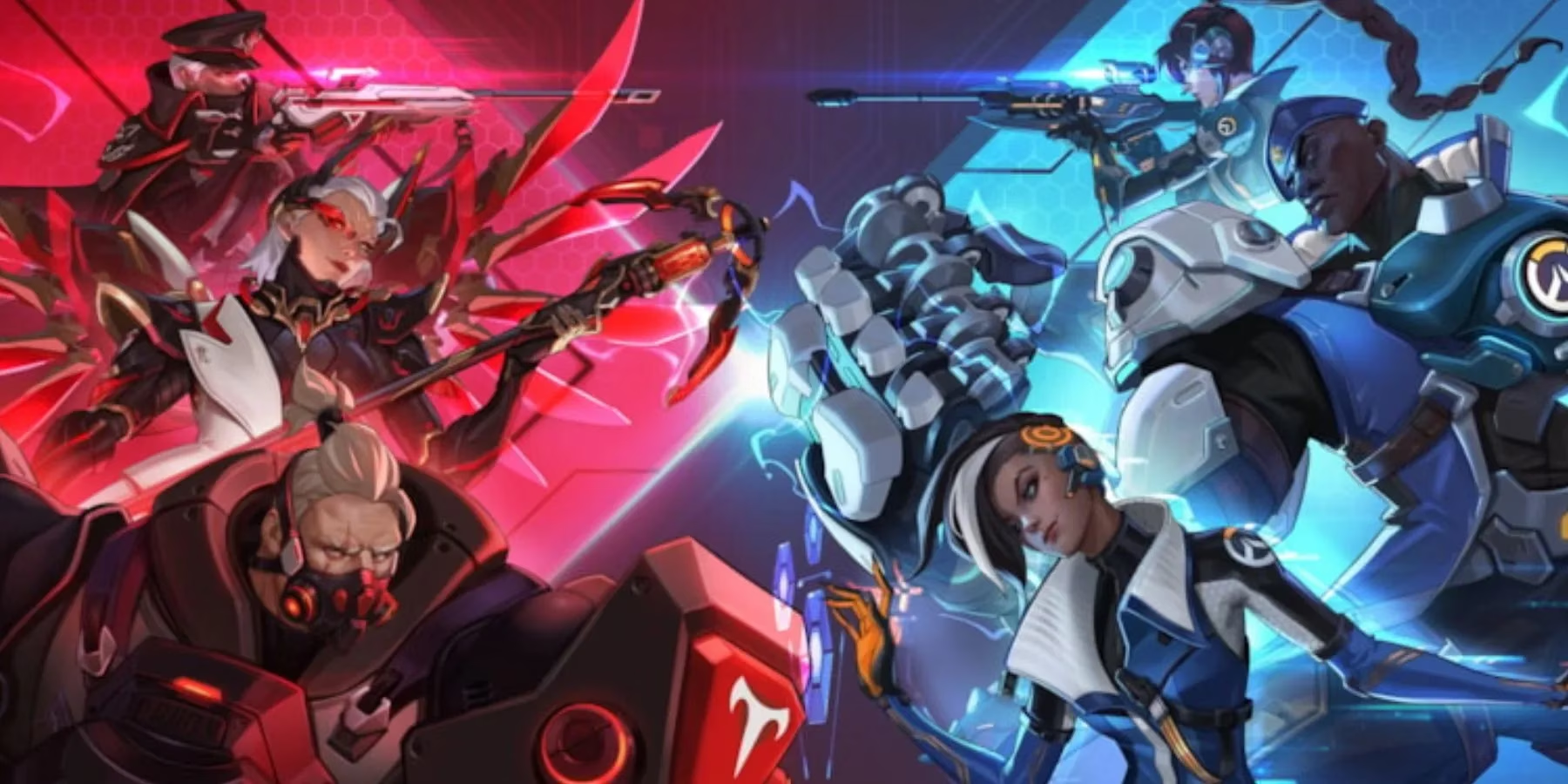
The limited-time Mirrorwatch mode was the main attraction, running from late April to mid-May. Selecting it from the menu felt like stepping through a looking glass. The developers didn't just slap new coats of paint on the characters; they rebuilt them from the ground up to fit their new allegiances. Every operative got a fresh identity, complete with new names and totally revamped ability kits. It wasn't just a cosmetic swap; it was a fundamental reimagining of how each character played. Talk about a meta shake-up!
Let me break down some of the most memorable transformations. Playing as the forces of Talon finally gave us a taste of power we'd only seen used against us.
The New Face of Villainy (and Heroism)
First up, Strike Commander Ogundimu—our old friend Doomfist, but now leading Overwatch? His kit was tuned for leadership. His Seismic Slam and Meteor Strike now granted overhealth to allies, turning his devastating dives into supportive power plays. His Power Block felt more strategic, a true commander's shield. On the flip side, facing a Fallen Knight Reinhardt was terrifying. His Barrier Field boosted ally damage, and his new passive, Frenzy, meant the longer he swung that hammer, the faster he became. It was a nightmare to deal with.
Talon's New Recruits
The role reversals were genius. Seeing Zarya as a Talon enforcer was a trip. Her Particle Cannon fired straight-line beams and piercing orbs, and her barriers now knocked enemies back when they expired. But the real kicker was her new ultimate, Expulsion Zone, a gravity surge that just pushed everyone away. Controlling space had never felt so... forceful.
Then there was Gwishin Bastion. This omnic menace traded its tank configuration for Configuration: Intel, which revealed enemies and boosted its own speed, and Configuration: Reinforcement, which deployed up to four allied Slicers. Playing against a Bastion that could summon a small army was a whole new ball game.
Blackwatch's Shadow Operations
The Blackwatch Echo was a stealthy predator. Her Sticky Bombs homed in, her Flight damaged and knocked back enemies, and her Focusing Beam slowed targets. Her new ability, Maximum Efficiency, supercharged her attack speed and slashed cooldowns. She was an assassin, pure and simple.
Agent Colomar—Sombra as a hero—was a supportive hacker. Her Hack could now boost allies' attack speed and grant them overhealth. Her Virus reduced enemy damage output, and her new Anti-Virus ability was a team-wide buff. She went from a backline disruptor to a combat facilitator. It was wildly cool.
The Lethal Edge of Talon
Talon Tracer was a bloodthirsty speed demon. Her Blink cost health to use extra times, and her new passive, Bloodthirst, allowed her to steal health from enemies after sustained damage. She was aggressive, risky, and incredibly potent.
Captain Lacroix, the heroic Widowmaker, was a protector. Her Widow's Kiss charged shots revealed enemies, and she gained a Silk Shield to place protective barriers. Her Infra-Sight highlighted weak points. She was less a lone sniper and more a tactical spotter for her team.
Support in the Mirror
The support role saw some of the most dramatic shifts. Arch-Commadant Amari, the villainous Ana, was a menace. Her Biotic Rifle could headshot, her Nano Boost was self-only for damage reduction, and she gained a Lunge for mobility. She was a frontline combat medic in the worst way.
Talon Brigitte was an oppressive brawler. Her Repair Pack granted lifesteal, her Whip Shot pulled enemies closer, and an empowered Shield Bash set them on fire. She was all about sustaining through combat and controlling engagement ranges.
But the crown jewel, for me, was Vengence—Mercy, consumed by rage. Her Caduceus Staff's damage boost now also dealt damage over time to nearby enemies. She gained Soul Burn to detonate fallen souls and her ultimate, Revenge, transformed her into a flying rocket-launching avenger. It was cathartic as hell to finally unleash that pent-up frustration.
Finally, the Z-3N Destroyer, Zenyatta, was a zone-controlling monster. His Orb of Discord now dealt damage over time, and his new ultimate, Interdiction Zone, created a field that silenced enemy abilities. His Snap Kick was hilariously powerful. He didn't just discord you; he shut down your entire toolkit.
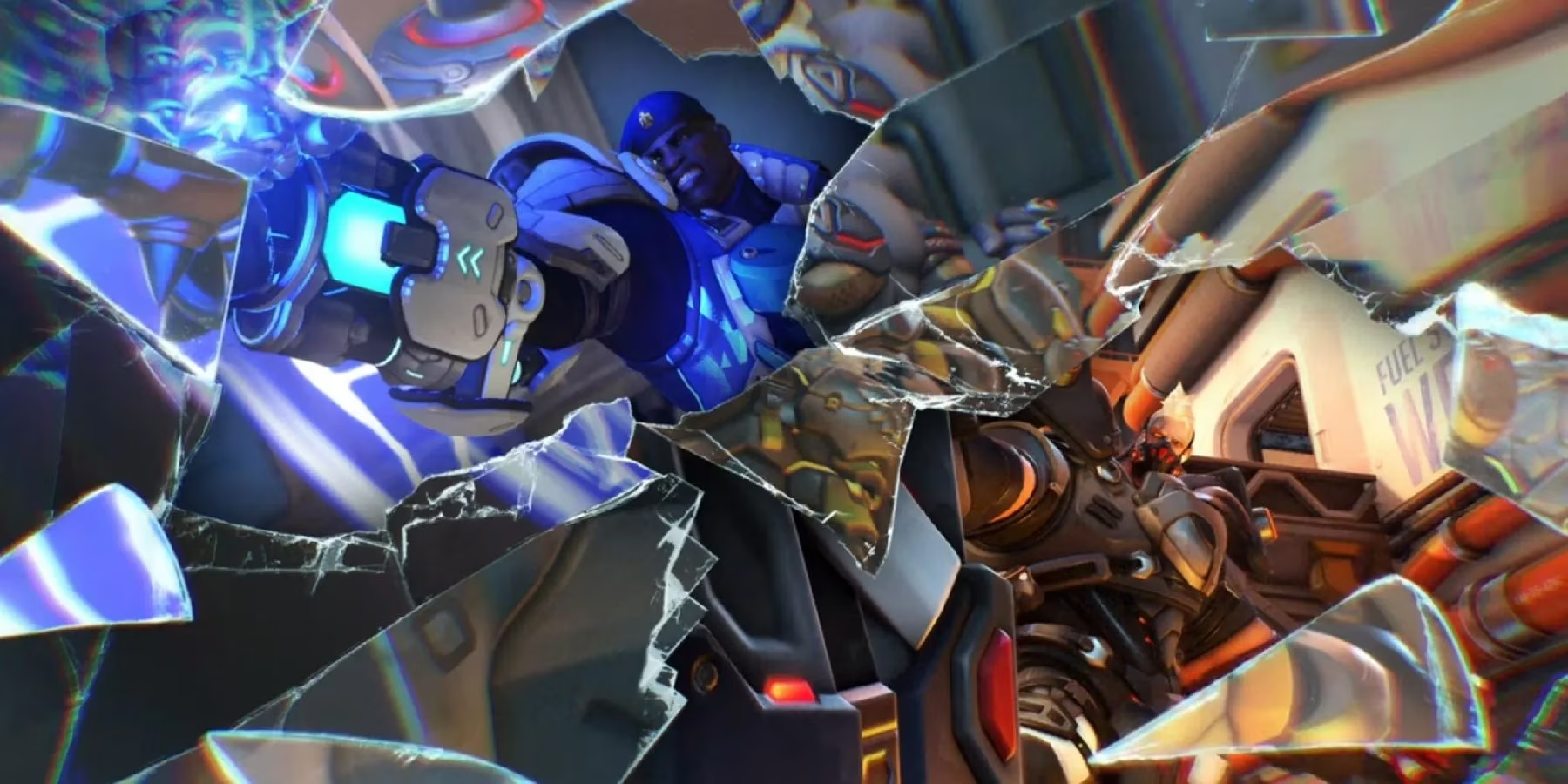
Reflecting from 2026, the Mirrorwatch event was more than a fun LTM (Limited Time Mode). It was a brilliant narrative and gameplay experiment that showed the depth of the Overwatch universe. It challenged our perceptions of hero and villain, good and evil. The kits weren't just inversions; they were thoughtful reworks that explored new playstyles. Playing as a supportive Sombra or a DPS Mercy felt incredibly fresh and showed the potential for future hero designs.
The community reaction was electric. For weeks, the forums were buzzing with strategies for the new kits. It was a breath of fresh air in the live service landscape. While the mode is now a cherished memory in the game's history, its legacy lives on. It proved that Blizzard wasn't afraid to get weird, to break their own rules, and to let players experience the other side of the conflict. As a long-time player, it's moments like Mirrorwatch that keep me coming back. It was, without a doubt, an absolute banger of an event. Here's hoping they bring something equally creative back soon!