Overwatch 2 hero perks and Stadium Mode inject fresh strategy and chaotic fun, reigniting excitement for returning and new players.
By early 2026, Overwatch 2 has begun to feel less like a cautious sequel and more like an energetic experiment. Players who drifted away after years of familiar team fights have returned not merely for nostalgia, but because the newest systems introduce choices that make each match unfold in unexpected ways. Could a handful of hero-specific upgrades and a deliberately chaotic third-person mode really restore the spark many felt when the original game launched? The evidence from recent preview sessions suggests the answer is a confident yes.
Hero Perks Are a Small Change With Outsized Impact
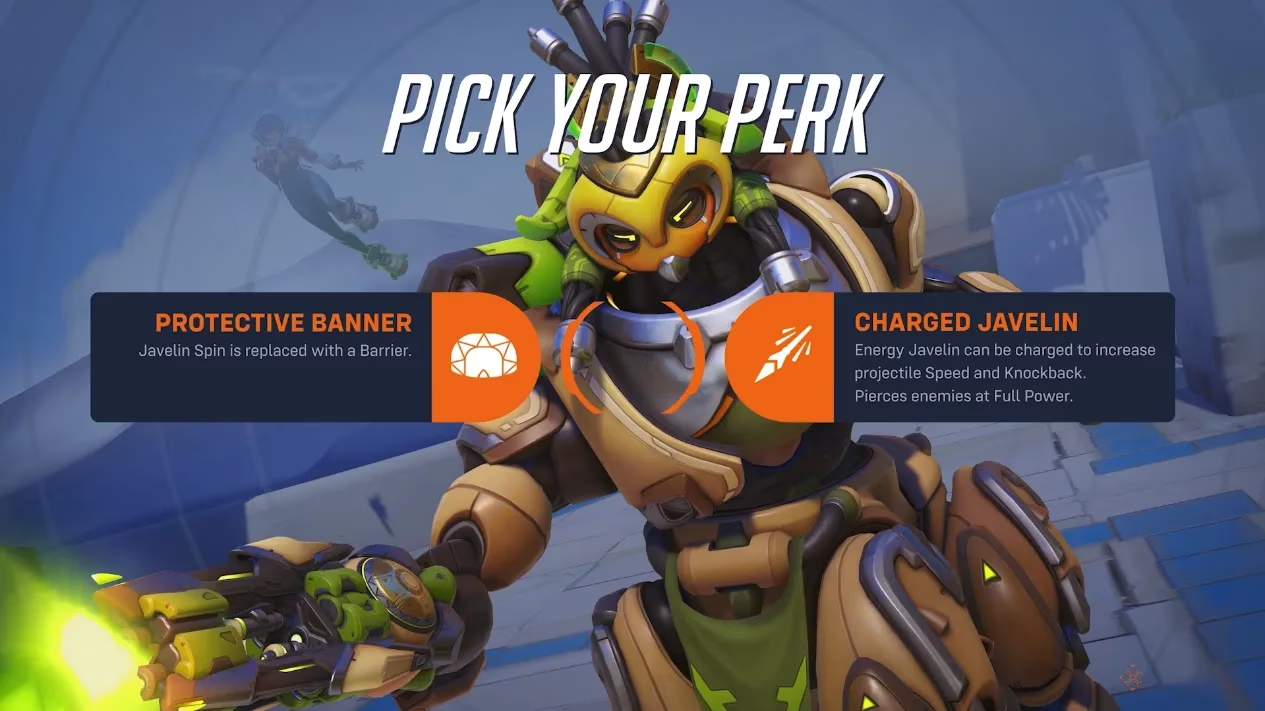
The Perks system offers exactly the kind of personalized depth that long-time players often crave. Rather than altering every hero from the ground up, it introduces selectable bonuses in Quick Play and Competitive modes. As a match progresses, players unlock choices that nudge a hero toward a particular playstyle without overwhelming the core loop.
Consider Junkrat, a hero who has always rewarded area control and timing. One available Perk increases his grenade travel speed while reducing ammo capacity by one. On paper, the trade-off sounds modest. In practice, faster projectiles give opponents less time to dodge, making the missing round almost unnoticeable. It is a subtle edge, but in a dueling shooter, subtle edges add up quickly.
D.Va provides another example. A Perk called Bunny Stomp amplifies damage when her mech is recalled. The effect is powerful, yet even experienced players may forget to trigger it during the heat of battle. That raises an interesting question: how quickly can a community with nearly a decade of muscle memory adapt to new habits? Lead gameplay designer Alec Dawson believes most players will eventually settle into their preferred paths and build fresh instincts. At first, the process can feel awkward, similar to patting one hand against the head while rubbing the stomach with the other. Over enough matches, however, the choices begin to feel natural rather than burdensome.
| Hero | Perk Idea | Practical Effect |
|---|---|---|
| Junkrat | Faster grenades, one fewer round | Less time for enemies to react |
| D.Va | Bunny Stomp | Extra impact when recalling the mech |
| Orisa | Major Perk options | Greater tactical flexibility |
Stadium Mode Turns Strategy Into Chaotic Fun
The second major addition, Stadium Mode, feels like Overwatch 2 finally allowing itself to be silly while still rewarding teamwork. It is a 5v5 format built around best-of-seven contests across Control, Push, and Clash objectives. What makes it stand out is a shop system in which players spend earned currency on Powers and Items that dramatically tweak their chosen hero.
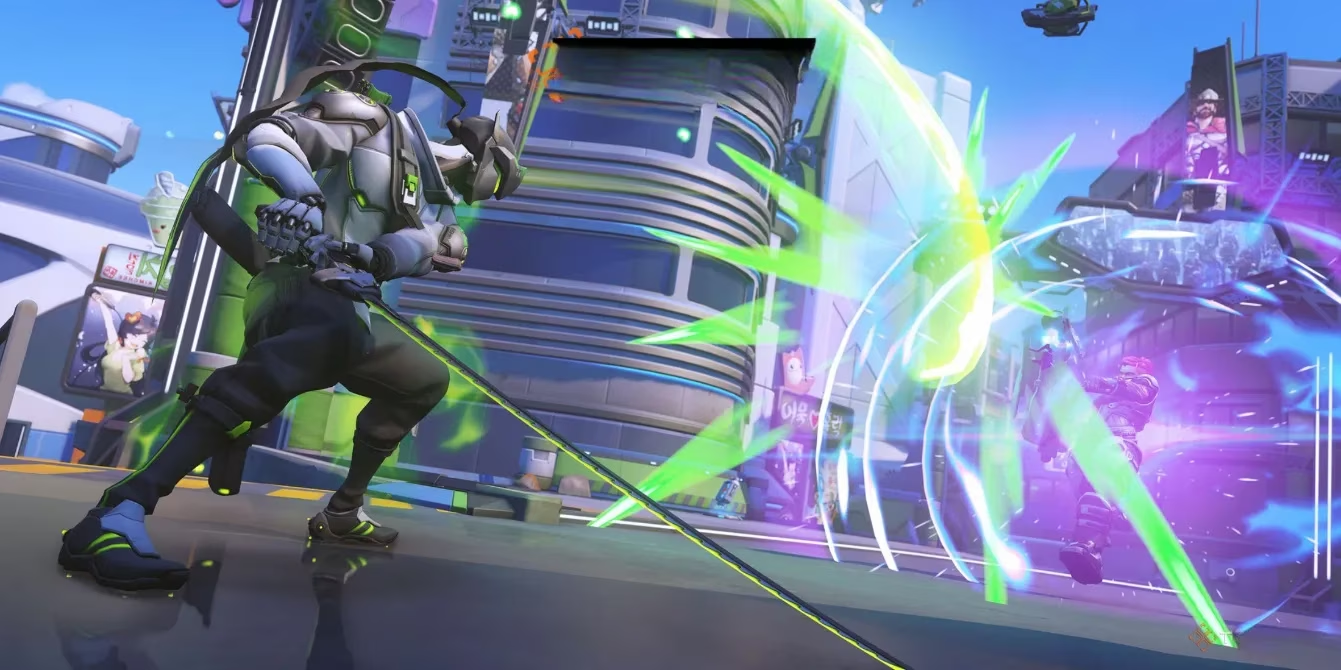
Some upgrades border on absurd in the best possible way. Soldier: 76 can gain a miniature ultimate effect whenever he uses Helix Rockets, while D.Va can transform into a mech-sized wrestler and slam the ground after boosting. This is precisely the kind of spectacle a mode like Stadium should deliver.
One rule gives pause: players are locked into a single hero for the entire match. Does that restriction feel limiting? Surprisingly, it does not. If a selected Power or Item fails to perform, it can be refunded for full value, allowing for rapid adaptation without losing the identity of the chosen character. Instead of encouraging constant hero swaps, Stadium pushes players to master one hero through evolving tactical choices.
The shift to a third-person camera also deserves attention. Because the wider perspective cuts down on visual clutter, chaotic team fights become easier to parse. Details such as Lúcio painting allies green with speed boosts or Soldier: 76 leaving a visible trail are far more noticeable than they ever were in first-person view.
A critical part of Stadium is the Armory, where menus can contain up to 30 icons per tab. There is plenty of reading involved, almost like flipping through a catalog between fights. Fortunately, each phase offers well over a minute to evaluate options, inspect teammate selections, and make thoughtful purchases. For now, exploration feels fresh. Later on, veteran players may settle into fixed builds, but the early discovery period is genuinely engaging.
Key Stadium features include:
-
💥 Five-versus-five matches spread across seven rounds
-
🛒 Earned currency used to buy Powers and Items
-
🔁 Full-value refunds for unsuccessful picks
-
🎮 A third-person camera for improved battlefield clarity
-
🔒 Hero locking that emphasizes mastery over switching
A Clear Turn Toward Playfulness
The most striking takeaway from these additions is not any single mechanic. It is the tone shift. For years, competitive integrity and balance precision dominated discussions around Overwatch 2. Perks and Stadium Mode suggest a team more willing to experiment without completely abandoning structure. The result is a version of Overwatch that feels playful again, not bound to decimal-perfect tuning at the expense of memorable moments.
Could these new systems eventually create balance headaches? Possibly. Every innovation carries risk. Yet the early impression is that Blizzard has found a way to inject personality into a franchise that needed a jolt. Perks offer personal expression in familiar modes, while Stadium delivers a strategic playground that feels both modern and nostalgic. In 2026, Overwatch 2 is once again worth watching—not because it is chasing the past, but because it is finally having fun with the future.
Data referenced from GamesIndustry.biz underscores why Overwatch 2’s 2026 pivot toward Perks and the shop-driven Stadium mode matters beyond simple patch notes: systems that add player-controlled variability can extend engagement by making match outcomes feel less scripted and more expressive. In practical terms, layered choices like hero-specific Perks (small trade-offs that subtly reshape muscle memory) and Stadium’s refundable purchases (risk-free experimentation within a locked-hero identity) align with a broader live-service push toward repeatable novelty—keeping the core teamplay readable while letting each round evolve into a new micro-meta.