Blizzard's strategic integration of Overwatch 2 into the thriving Overwatch League promises to redefine esports with compelling gameplay evolution, engaging tournaments, and seamless transition strategies.
The gaming world anticipates Blizzard's strategic move with Overwatch 2, particularly regarding its integration into the thriving Overwatch League ecosystem. Since its establishment in 2018, the League has redefined esports standards, attracting millions of viewers and fostering a global community. The upcoming sequel raises critical questions about competitive continuity, player adaptation, and audience engagement. Industry analysts speculate whether Blizzard will mirror Valve's successful Dota 2 transition or face challenges akin to the StarCraft II era.
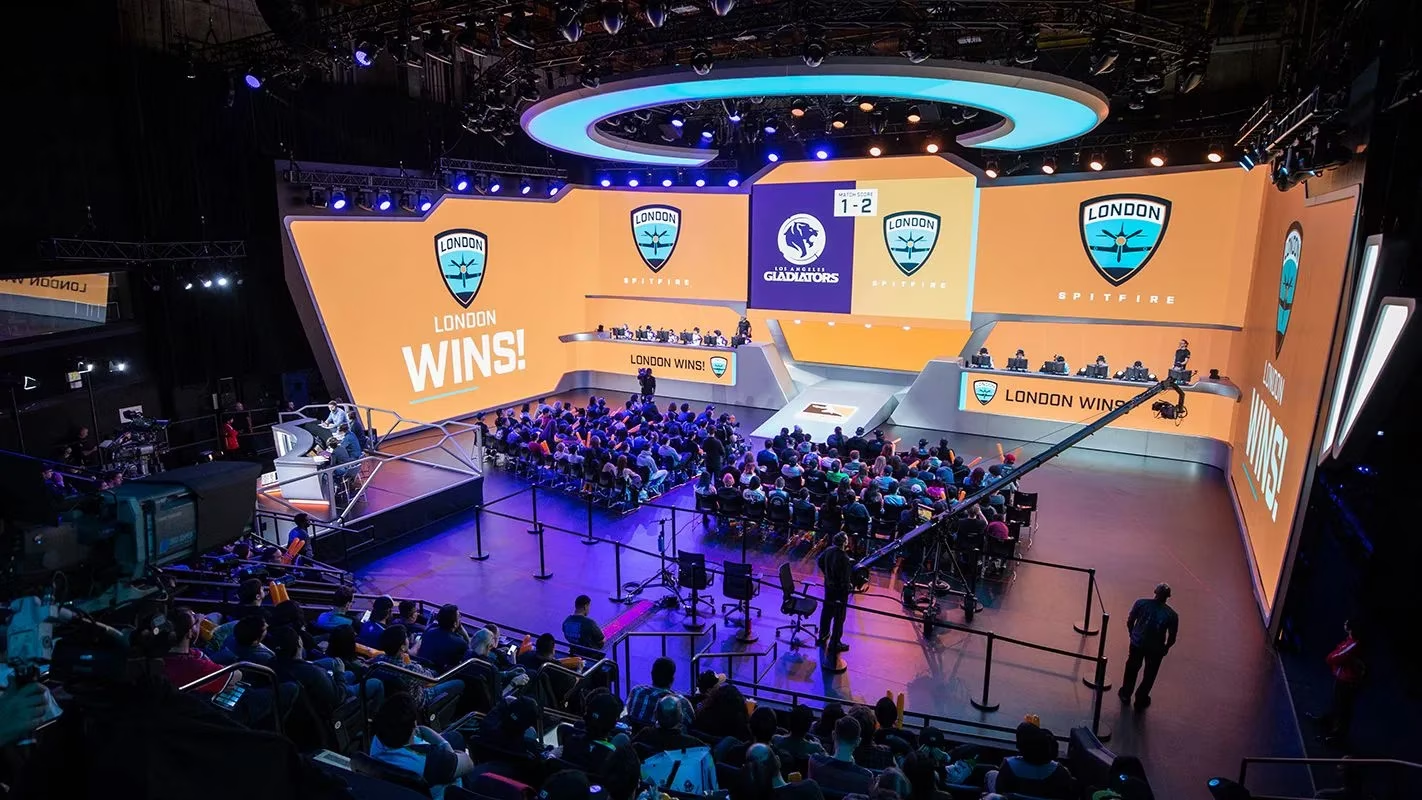
Current League infrastructure represents a monumental investment, with teams adopting home-and-away systems resembling traditional sports. This framework supports 20+ franchises worldwide, each boasting dedicated training facilities and fan bases. The League's stability suggests cautious evolution rather than abrupt overhaul. However, Overwatch 2's potential PvE focus could create divergence between casual and competitive gameplay. Such duality might necessitate parallel tournaments or specialized rule sets.
Key considerations for the transition include:
-
Timeline Synchronization: Balancing sequel release with ongoing League seasons
-
Player Training Periods: Allowing pros to master new mechanics before official integration
-
Cross-Game Compatibility: Ensuring seamless data migration for skins and achievements
-
Viewer Experience: Maintaining broadcast consistency during technical updates
Blizzard's approach to StarCraft II's contentious rollout serves as a cautionary tale. The company now prioritizes stakeholder collaboration, evidenced by their ongoing dialogue with team owners. Recent BlizzCon demonstrations revealed enhanced engine capabilities, suggesting Overwatch 2 may refine rather than replace core mechanics. This evolutionary approach would facilitate smoother competitive adoption.
Speculation about special showcase tournaments persists, potentially mimicking Valve's 2011 International model. Such events could bridge communities by featuring:
-
Legacy Overwatch exhibitions celebrating current metas
-
Hybrid tournaments testing partial Overwatch 2 integrations
-
All-star matches utilizing experimental sequel features
Financial implications remain paramount. League franchise spots reportedly cost $20-35 million, incentivizing gradual transition strategies. Sponsorship contracts and media rights agreements further complicate immediate wholesale changes. Nevertheless, Blizzard's history of supporting long-term esports ecosystems suggests thoughtful, player-centric implementation.
The broader gaming landscape watches closely as Overwatch 2 could set precedents for live-service game evolution. Its handling may influence future titles like Apex Legends and Valorant, where sequel development must reconcile with established competitive scenes. Ultimately, Blizzard's challenge lies in honoring existing investments while embracing innovation—a delicate balance that could define next-generation esports.