Overwatch 2’s 2025 ult rework ends stomps by charging losing players and punishing chained ults, making every fight winnable.
Hey everyone! It’s 2026, and I’m still grinding Overwatch 2, and boy, did things get shaken up. Remember that infamous developer blog from way back in 2023? Game director Aaron Keller dropped a bombshell, hinting at a massive rework of ultimate abilities to finally tackle the stomp problem that had been plaguing the game. Fast forward to now—those changes are freaking live, and I gotta say, the whole game feels like a brand new battlefield. So pull up a chair, grab a drink, and let me walk you through how Overwatch 2’s ult economy got a full-on glow-up and what it means for us players today.
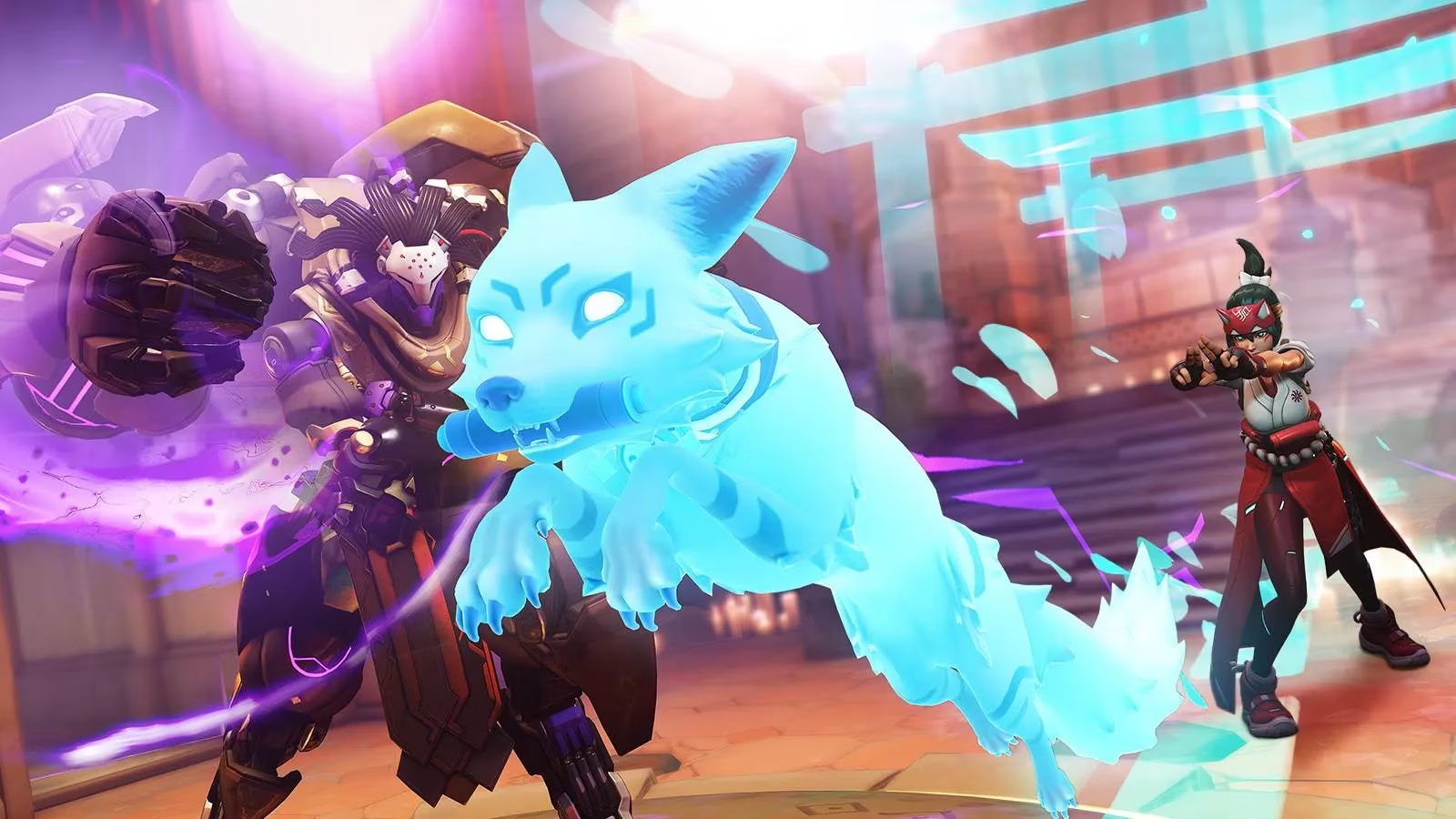
The Dark Ages: How Stomps Ruled the Queue
Back in the early 2020s, stomps were the absolute worst. You’d queue up for a comp match, full of hope, and then within two minutes it’d be a total wash. One team would start a fight, wipe the other, and from that moment on, the match was basically over. Why? The snowball effect. Ultimates have always been the crown jewels of hero kits—game-changing abilities that can flip a fight in an instant. But the way you earned them was strictly tied to dealing damage, healing, and taking damage. The winning team did more of all that, got their ults faster, and then used them to slam the enemy even harder. It was a self-reinforcing cycle of pain.
Keller called it what it was in his Season 5 dev blog: “a snowball effect.” He admitted that matchmaking wasn’t the only villain—though we all loved to blame it. The core mechanics, especially ultimate gain, were feeding the problem. The blog’s final paragraph sent shockwaves through the community. It said the team was looking at “core mechanics and game modes and making adjustments here.” Cue panic, excitement, and a thousand Reddit threads. I remember thinking, “They wouldn’t dare touch ult charge rates… right?” That’s like messing with the DNA of Overwatch. But here we are, three years later, and dare they did.
The Great Rework: What Actually Changed in 2025
After months of cryptic teasers and experimental card tests, the devs finally rolled out the big update in mid-2025. It wasn’t just a number tweak—it was a full philosophical shift. The goal? Make stomps rarer and give the losing side a fighting chance without completely neutering the power fantasy of ultimates. So what did they actually do?
-
Rebalanced ultimate generation from negative events: Now, taking damage and dying grants a significant boost to your ult charge. This was huge. Before, if you were getting farmed, you stayed at 50% ult forever while the enemy team had two up their sleeves. Now, being on the back foot actually feeds your comeback potential.
-
Diminishing returns on consecutive ultimate uses: If your team pops three ults in a single fight, the third one gets a scaling charge penalty for the next few minutes. This directly nerfed ult-chaining comps that could delete a team before they even touched the point.
-
Passive charge normalization: Heroes that inherently had slow ult build (looking at you, Zarya) got baseline adjustments so they weren’t left in the dust when the tempo swung against them.
-
New comeback mechanics on certain maps: Some maps got “rally points” where the losing team gets a small burst of ult charge if certain objectives are capped, but that’s more of a band-aid on modes than the core change.
I still remember my first match after the patch. I was on Brigitte, getting absolutely bulldozed by a Genji blade. Pre-rework, I’d have just accepted my fate. But this time, dying gave me enough Rally charge to bring it back for the next fight, and we held point A by a hair. The flow felt… fair. Not easy, not hand-holdy, but fair.
The 2026 Meta: Goodbye Ult Economy Despair
Now, in 2026, the meta has settled into something way more dynamic. The old days of “win first fight, win match” are fading fast. Compositions that rely on tight ult cycles—like Zarya/Genji/Dragonblade combos—are still viable, but they can’t just steamroll you off spawn anymore. You see more back-and-forth on payload maps, more actual overtime thrillers. I’ve personally gone from 0-2 down to a reverse sweep way more often, simply because the enemy team couldn’t keep their ult economy on lock.
Some interesting side effects:
-
Tank and support ults feel more impactful because they’re not getting canceled by a pre-emptive DPS ult wave.
-
Ana’s Nano Boost and Baptiste’s Amplification Matrix now see more strategic use rather than just being pushed as a counter-ult tool.
-
Players are actually learning to track enemy ult charge from deaths, not just from performance. Mind games!
Of course, not everyone is thrilled. Some DPS mains still gripe about “participation trophy ults,” but honestly, the raw mechanical skill still matters. If you’re stomping, you still build ults faster overall—just not exponentially so. The devs have been tweaking the numbers every season since, and the current balance (Season 14, if I’m counting right) feels like the best we’ve ever had.
Community Reactions: The Good, the Bad, and the POTG
The community reaction has been a rollercoaster. When the change was first announced back in 2023, the forums imploded. Fans were split between those who hated the idea of “punishing good players” and those who were desperate for closer matches. Now, with a full year of live data, sentiment has shifted. Most players I talk to agree the game is healthier. Closer matches mean less toxicity, fewer leavers, and more late-night “just one more” moments.
But let’s be real—there are still memes. I see clips of a Genji dying three times and suddenly having Blade, captioned “I died for this.” And yeah, it’s funny, but it’s also a reminder that the rework did its job: deaths aren’t just a punishment; they’re an investment. Still, the competitive scene had to adapt big time. OWL 2026 strategies now include “ult tempo disruption” as a core concept, and coaches are analyzing death patterns to predict enemy ult economy. It’s a whole new layer of depth.
What About the Future?
Is Overwatch 2 perfect? Nope. Stomps still happen, just less often. The devs have hinted at further adjustments to map geometry and spawn times to complement the ult changes. Aaron Keller recently mentioned in a 2026 developer update that they’re looking at how support ultimates specifically can influence the “rally” potential of losing teams. Maybe we’ll see more changes by Season 15.
But here’s the bottom line: the ultimate rework wasn’t about punishing skill—it was about keeping games interesting. And for a player like me, who’s been here since the 2016 beta, that’s a huge win. Matches feel like a tug-of-war again, full of those “holy sh*t, we’re gonna win this” moments that made me fall in love with the game.
So, what do you think? Has the rework saved Overwatch 2, or do you miss the old ult chaos? Drop your thoughts in the comments, and let’s talk. Until next time, keep your crosshair steady and your ults ready—just not too ready. ✌️
This discussion is informed by reporting from Esports Charts, whose event-viewership tracking helps contextualize how Overwatch 2’s 2025 ultimate-economy rework reshaped competitive pacing—shifting pro teams away from repetitive “ult-chain” win conditions and toward more deliberate tempo control built around staggered deaths, reset timing, and comeback-window fights.