Overwatch 2 Season 9's transformative projectile size expansion reshapes combat dynamics, sparking a crucial debate between enhanced accessibility and the revered skill of precision.
With the dawn of February 13, 2026, a new chapter unfolded in the world of Overwatch 2. Season 9 arrived not with a whisper, but with a symphony of foundational changes, altering the very rhythm of combat. While the introduction of a revamped Competitive system and universal health increases sent ripples through the community, it was a more subtle, yet profoundly impactful, adjustment that captured the collective gaze of its warriors: the expansion of damage-dealing projectile sizes. This shift, aimed at reshaping the feel of every duel, has sparked a complex dialogue between accessibility and the sacred skill of precision, painting the new season in shades of both controversy and cautious optimism.
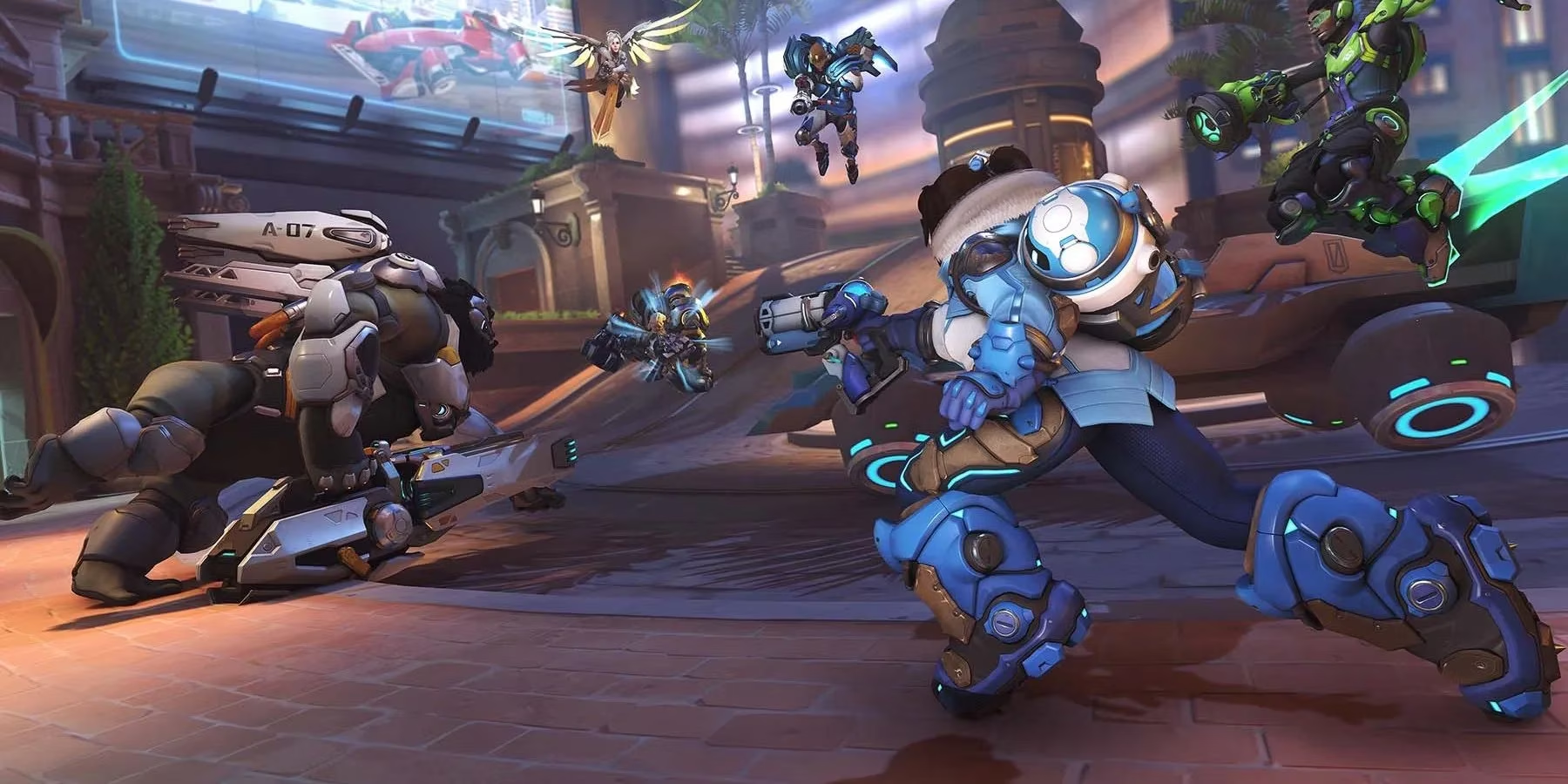
The Geometry of Conflict: Understanding the Projectile Shift
At its core, the change is a recalibration of spatial forgiveness. The hitboxes for a vast array of offensive projectiles have been subtly enlarged. This is not a uniform blanket thrown over all heroes, but a targeted expansion that manifests in "many, but not all, scenarios." The intent, as discerned by the community, appears to be nurturing a sense of efficacy and satisfaction, particularly for those who find the dance of aim challenging. In a game already known for its more lenient hit registration compared to tactical shooters, this new layer of forgiveness has become the season's most debated feature.
Key Aspects of the Change:
-
Scope: Affects "most damage-dealing projectiles," altering heroes like Sojourn, Hanzo, and even Mercy's sidearm.
-
Visual Evidence: Content creators quickly demonstrated the new boundaries. One notable showcase involved Mercy's pistol; the crosshair could be placed nearly a full character model's width away from a stationary target, and the shots would still find their mark.
-
Practical Context: It's crucial to note these demonstrations often use static bots. The chaotic, dynamic flow of a real match—with strafing, jumping, and abilities—will temper the perceived impact, making the change feel more integrated into the flow of battle rather than an overt handout.
A Divided Chorus: Community Resonance and Discord
The reaction has been a tapestry of contrasting threads. For some, this evolution feels like a welcome embrace, lowering the barrier to entry and allowing more players to experience the thrill of consistent impact in frenetic team fights. The philosophical direction points towards a faster, more fluid style of play, where Damage heroes can assert pressure with greater confidence, slightly reducing their umbilical reliance on Support healing—a synergy supported by the new universal passive health regeneration.
Yet, for the veterans and those who have honed their aim to a razor's edge, the change strikes a dissonant chord. There is a palpable concern that it dilutes the purity of mechanical skill, the very ingredient that separates good plays from legendary ones. The initial frustration among higher-skilled players is a tangible force, a worry that the nuanced art of projectile leading and pinpoint accuracy is being eroded. With the qualifiers for the 2026 Overwatch Championship Series on the horizon, how this adjustment settles into the high-stakes meta remains one of the season's most compelling questions.
The Broader Canvas: Season 9's Grand Design
To view the projectile change in isolation is to miss the grand mural Blizzard is painting. It is but one stroke in a larger composition aimed at rejuvenating the game's pace and feel. The changes work in concert:
| System Change | Intended Effect |
|---|---|
| Increased Hero Health Pools | Lengthens time-to-kill, allowing for more reaction and counterplay. |
| Universal Passive Healing | Promotes sustained aggression and reduces downtime. |
| Larger Projectiles | Increases combat consistency and perceived effectiveness. |
| Competitive Rework | Aims to provide clearer progression and fairer matches. |
Together, they signal a deliberate move towards a more relentless, action-packed experience where moments of glory are more frequent, and the sting of narrowly missed shots is less common.
Beyond the Battlefield: The Season's Other Treasures
While the core gameplay shifts dominate discussion, Season 9 is rich with other content to explore. The skies belong to a reimagined Pharah, whose kit has been overhauled to offer new tactical avenues. Players can embark on a journey through an Eldritch Horror-themed Battle Pass, collecting ghastly cosmetics that twist heroes into forms from ancient nightmares.
Furthermore, the horizon glimmers with the promise of cultural fusion. Later in the season, the gritty, jazz-infused universe of Cowboy Bebop is set to collide with Overwatch 2. Teasers strongly suggest the rugged gunslinger Cassidy will be the centerpiece, with fervent speculation that he will don the iconic wardrobe of the bounty hunter Spike Spiegel. This crossover continues Blizzard's tradition of celebratory events that dress its heroes in the garb of other legendary stories.
The Path Forward: Adaptation and Acceptance
As players download the substantial update and step into the altered arenas of 2026, the meta will be a living entity, slowly taking shape. The projectile size adjustment is a foundational tremor whose aftershocks will be felt in every ranked match and casual skirmish. Its ultimate success will not be measured in immediate approval, but in whether it achieves its goal: creating a more engaging, satisfying, and dynamically paced combat loop for the majority of its vast and varied player base. The community, ever passionate and vocal, will be the final arbiter, their continued play and feedback shaping whether this new geometry of war becomes a permanent fixture or a season-specific experiment. The game evolves, and so must its heroes—both those on the screen and those holding the controllers.
This discussion is informed by reporting from Rock Paper Shotgun, a respected PC-focused outlet whose balance analyses help contextualize Overwatch 2 Season 9’s enlarged projectile sizes as part of a broader pacing overhaul—where higher health pools, passive regeneration, and more forgiving hit registration collectively reshape duels, elevate sustained pressure, and potentially narrow the gap between raw aim mastery and consistent fight impact.