Overwatch Classic and Overwatch 2 unite nostalgia and innovation, letting players relive Patch 1.0's chaotic hero shooter glory in a thrilling arcade event.
In the ever-evolving landscape of competitive gaming, few events capture the collective nostalgia of a player base quite like a journey back to a title's origins. In 2025, Blizzard Entertainment introduced Overwatch Classic as a limited-time Arcade mode within Overwatch 2, specifically during its thirteenth season. This special event, running for a three-week period, promised to transport players back to the foundational Patch 1.0 of the iconic hero shooter, the very version that debuted in May of 2016. The core premise was enticing: a return to a time before role locks, where team compositions were only bound by a six-player limit, reviving the chaotic and creative metas of yesteryear. While the mode has successfully drawn significant attention by offering a portal to a game from over eight and a half years ago, dedicated fans and professional players alike have noted that this experience, while nostalgic, is not a flawless recreation. It stands as a fascinating homage, but one that carries the noticeable imprint of its modern host, Overwatch 2.
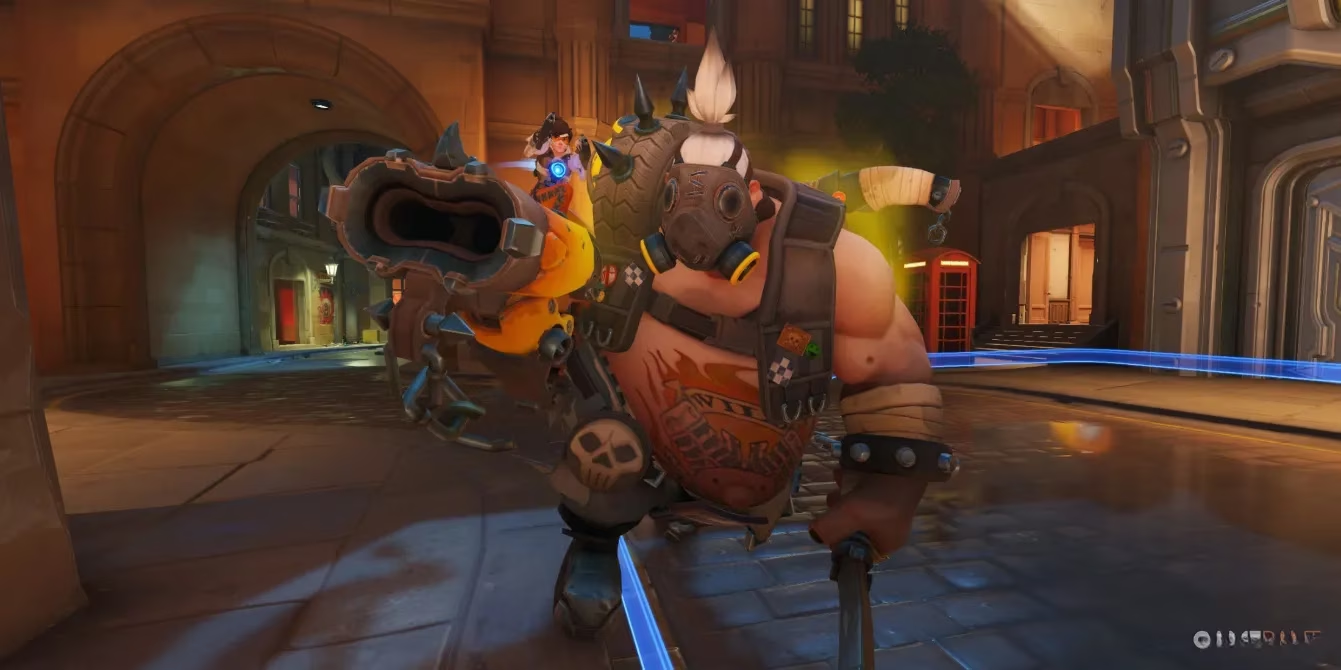
The Core Experience: Freedom and Familiar Mechanics
The primary allure of Overwatch Classic is its liberation from contemporary restrictions. Players are free to assemble any hero lineup they desire, harkening back to the infamous "GOATS" composition or teams featuring multiple snipers or supports. This freedom is the mode's greatest strength, allowing for strategic experimentation and pure, unadulterated chaos that defined the game's early years. The hero roster is locked to the original 21 champions, each utilizing their default appearances from the 2016 era, which cannot be altered with modern cosmetics. Notably, the gunslinger hero is presented as Cassidy, not by his original namesake, a change implemented in the live game following real-world controversies and respectfully maintained in this historical mode.
Key gameplay mechanics from Patch 1.0 have been faithfully reinstated:
-
Ultimate Charge Retention: Abilities like D.Va's Self-Destruct or Tracer's Pulse Bomb retain their charge even after the hero is eliminated, a feature later changed in subsequent updates.
-
Original Hero Kits: Heroes possess their launch-era abilities and statistics. For example, Symmetra provides shielding and her original teleporter ultimate, while Torbjörn must manually forge armor packs and his turret possesses different upgrade tiers.
-
The "On Fire" System: This fan-favorite mechanic, which visually indicates a player's high performance, has made a full return, adding to the vintage feel.
Notable Omissions: What's Missing from the "Classic" Formula?
Despite these authentic touches, the mode exhibits several significant departures from the true 2016 experience, creating what many in the community describe as a "modernized classic." These changes primarily stem from the technical and UI framework of Overwatch 2.
1. The User Interface (UI) & Presentation
The original Overwatch featured a distinctive, minimalist interface with transparent elements and stylized visuals. A charming detail was the decorative level portrait that framed a player's selected hero on the main screen and during gameplay. In Overwatch Classic, while these portraits exist on a player's profile page, they are conspicuously absent during matches, replaced by the cleaner, more streamlined Overwatch 2 HUD. This subtle shift removes a layer of the original game's unique personality.
2. The Vanished Medal System
Perhaps the most glaring omission for veterans is the complete absence of performance medals. In Overwatch 1, players were awarded Gold, Silver, and Bronze medals in five key categories during a match:
| Medal Category | What It Measured |
|---|---|
| Eliminations | Final blows or assists on enemy heroes. |
| Damage Done | Total damage dealt to enemy targets. |
| Healing Done | Total health restored to allies. |
| Objective Kills | Eliminations secured while on or near the objective. |
| Objective Time | Time spent actively contesting or controlling the objective. |
This system fostered both pride and, famously, misleading claims in team chat, as players could only see their own medals. The modern scoreboard system from Overwatch 2, which allows players to view statistics for all twelve participants, is present in Overwatch Classic. This transparency is a quality-of-life improvement but fundamentally alters the social dynamics and self-assessment of the original experience. The post-match voting card screen, which sometimes exposed exaggerated stat claims, is also missing.
3. Lack of a Competitive Structure
Currently, Overwatch Classic is offered solely as a casual Arcade mode. The original game's Competitive Play system, with its visible Skill Rating (SR) and seasonal rewards, is not part of the package. For a mode aiming to replicate a bygone era, the absence of this ranked tension is palpable. Many players have suggested that future iterations would benefit from being a season-long event with its own dedicated mini-competitive ladder, complete with SR and exclusive rewards. This would greatly enhance the mode's longevity and appeal, though it might risk fragmenting the player base and increasing queue times for other playlists.
The Verdict: A Welcome, If Imperfect, Blast from the Past 😊
Overwatch Classic succeeds brilliantly as a nostalgia-driven event. It provides a fun, chaotic playground where players can experience the raw, unbalanced, and wonderfully creative early days of the game. The ability to run wild with any team composition is a joy that has been largely absent from the structured modern meta. However, its presentation through the Overwatch 2 client means it is more of a "greatest hits" compilation filtered through a modern lens rather than a perfect archival re-release.
The changes—from the UI and the missing medals to the omnipresent scoreboard—serve as constant reminders that this is a curated retrospective. For new players, it's an exciting history lesson. For seasoned veterans, it's a bittersweet reunion with an old friend who has, inevitably, changed a bit over the years. The hope within the community is that if Overwatch Classic returns in future seasons, Blizzard might find ways to incorporate more of these authentic, quality-of-life-adjusting details to craft an even more genuine tribute to the game's legendary inception.