Ramattra's Overwatch 2 debut ignited fierce debate over battle pass hero unlocks, forcing a weeks-long grind threatening balance.
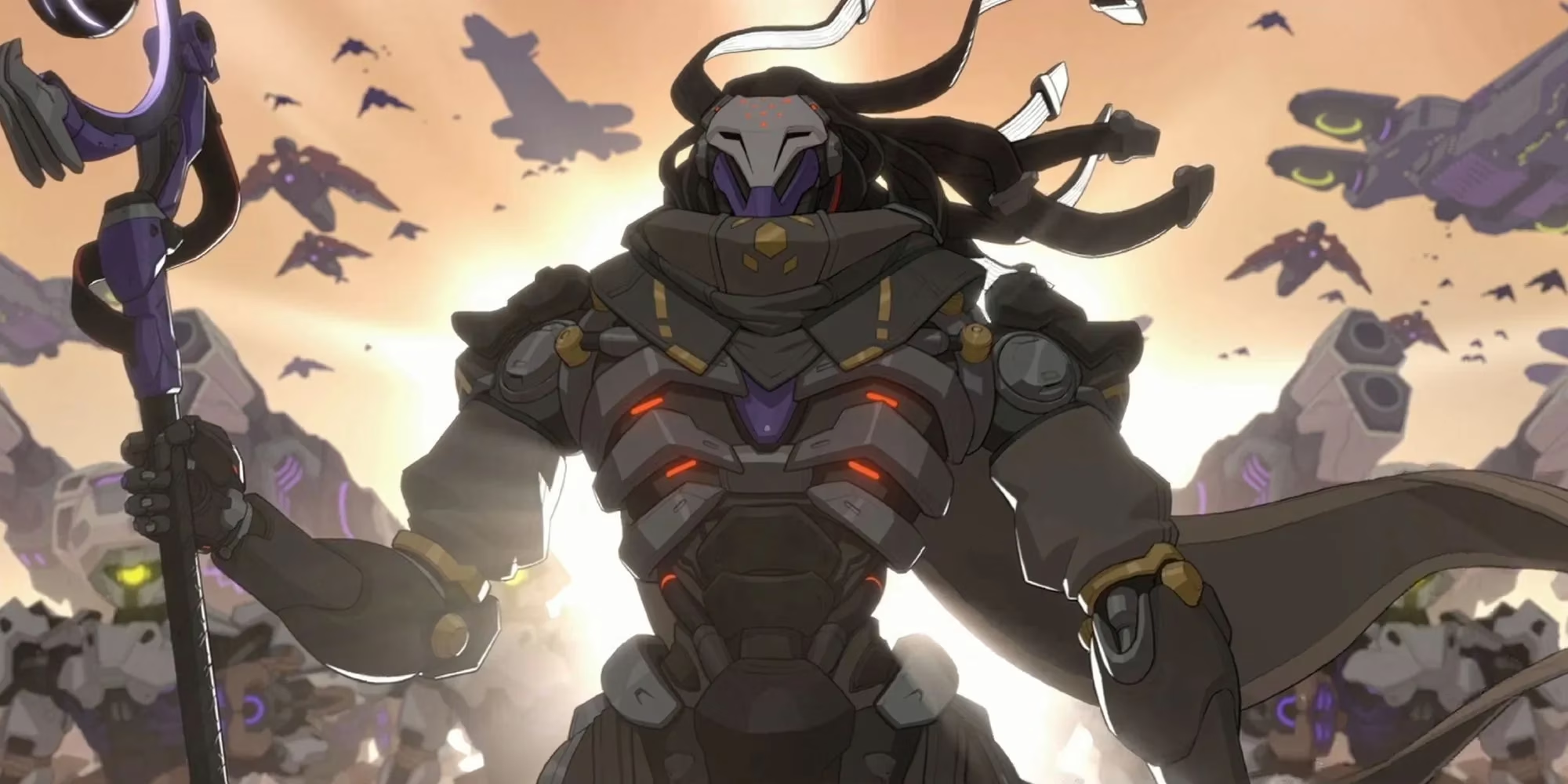
The reveal landed like a thunderclap in the dead of night—a cinematic teaser crackling across every Overwatch 2 player’s feed in late 2022. Ramattra, the towering omnic Tank with a philosopher’s mind and a revolutionary’s fury, was striding into the roster on December 6 alongside Season 2. His design was a paradox of grace and menace, a storm cloud sculpted into a mechanical warlord. But as the initial awe settled, a different kind of thunder rolled in. This was the moment the hero unlock system stopped being a background mechanic and became a frontline debate that would echo well into 2026.
 .jpg)
.jpg)
Back then, the Overwatch 2 Battle Pass was still a fresh scar on the skin of the community. Kiriko had already tested the waters, locked away behind the free track for players who hadn’t owned the original Overwatch, her arrival stirring a minor tempest. But Ramattra was different. He was the first new hero everyone—veterans and newcomers alike—would have to claw through tiers to unlock. The promise of a free-to-play future suddenly tasted metallic, like a coin wrapped in tinfoil. For those unwilling to upgrade to the premium pass, the grind began, and it was a grind measured not in hours but in weeks, a slow-moving glacier carrying a locked hero on its back.
On the subreddit r/Overwatch, the sentiment was a chorus of fractured excitement. One player, going by justinhu87, laid it bare: “Ramattra looks cool, but I don’t want to pay or wait to play him. I don’t want to pay $10. I don’t want to wait weeks to unlock him. I don’t want to lose games while waiting for him to be unlocked.” Their words rippled outward, a pebble thrown into a pond of collective anxiety. Another voice, FramePancake, framed the practical nightmare: “Yeah, this is the first hero release that while cool, I’m not excited for knowing the BP grind to get it. How will they deal with the disparity of some teams not having the option to choose/swap to the new hero?” It was a logistical poison seeping into the competitive well—imbalance born not of skill, but of paywall timing.
The official Blizzard forums mirrored the unrest. The hottest embers of worry glowed around one number: level 55. Kiriko had been entombed at that tier on the free Battle Pass, and for many players, reaching it had demanded a pilgrimage of 50 hours. The prospect of a Tank locked behind the same gate was like a marathon runner being told the finish line keeps moving. Feedback became a tidal wave, crashing against the seawall of Blizzard’s surveys. The company did send out a questionnaire around that period, prodding at spending habits, perhaps sensing that the Battle Pass model needed its bones reset. For a brief moment, hope flickered that Ramattra’s launch would come with adjustments—an easier climb, a lower rung, a bone thrown to the free pass holders.
Looking back from 2026, that winter of discontent was the spark that forced Overwatch 2’s economy to evolve. The controversy didn’t just fade; it fermented into a sustained pressure that eventually reshaped how heroes were released. Later seasons saw experimentation: some heroes dropped at level 30, others were granted early access through limited-time challenges. The metaphor of the locked hero as a distant summit slowly transformed into a hill with multiple approach trails. And yet, the ghost of Ramattra’s debut still haunts the community’s memory—a reminder of when a beloved character arrived not as a gift, but as a test of patience. The lesson, carved in the bedrock of Game-as-a-Service design, is that even the most cinematic reveal can sour if the key is hidden behind a paywall, and that a Tank’s true armor isn’t in his hit points, but in the loyalty of the players who are willing to wait for him.
The debate at its core hasn’t aged: it merely found new shapes. By 2026, the Battle Pass remains a fixture, but the scream of “pay-or-grind” that Ramattra ignited became the kindling for a more flexible unlock philosophy. Blizzard’s later heroes, like Freja and Emre, launched with multiple acquisition paths—event-based unlocks, shorter free tiers, and even a “hero trial” token system. Ramattra himself, in a quiet patch during 2024, was moved to the permanent hero gallery unlockable with legacy credits, becoming a monument to the battle he helped start. His swirling vortex of rage, once locked behind a paywall, now symbolizes the storm that reshaped the landscape. And for the players who were there in December 2022, watching that first trailer with a mixture of awe and dread, the memory is a tattoo: a beautiful design inked with a needle of frustration, reminding everyone that in the live-service age, the grind is not just a system—it is a story, and sometimes the heroes are the ones we have to fight to play.