2022’s gaming dramas—Call of Duty’s acquisition battle, Ragnarok’s hand-holding, and Pokémon’s technical woes—shaped the industry, but little changed.
It’s a chilly autumn evening in 2026, and I find myself rummaging through old gaming forums and articles, chuckling at the things we once argued about. Four years have passed since November 2022, but the echoes of that month’s gaming dramas still rattle around in my head like a loose screw in a controller. Back then, I was up to my eyeballs in heated debates, busted open-world games, and live-service meltdowns. Now, with the benefit of hindsight, I can finally sit back and unpack how those seemingly endless controversies shaped the industry we know today—and whether we ever really learned from them.
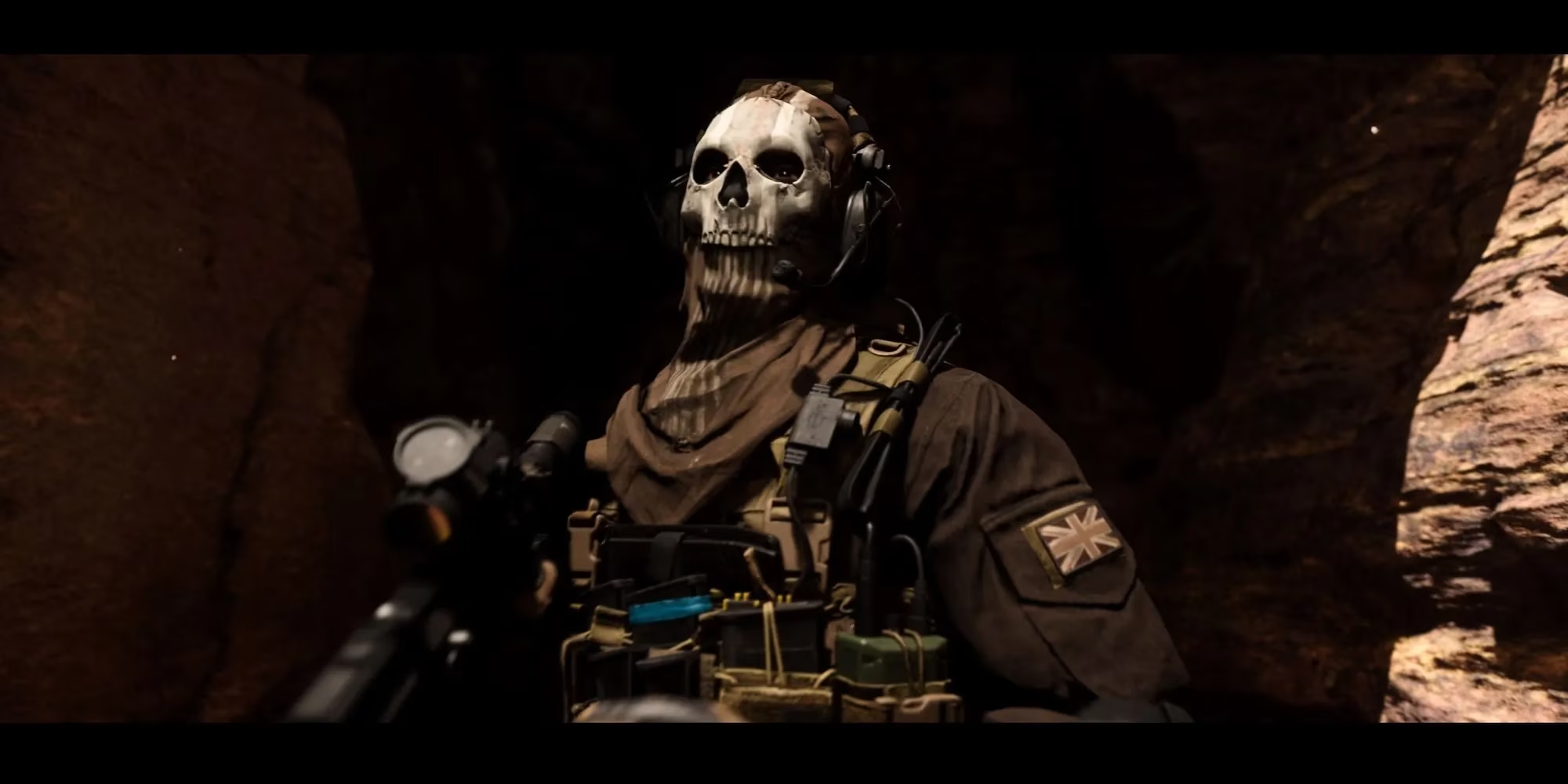
One memory stands out: the bitter corporate tug-of-war over Call of Duty. I vividly recall sitting in my tiny apartment, scrolling through news that felt more like a legal drama than video game coverage. Microsoft was trying to swallow Activision Blizzard whole, and Sony was fighting tooth and nail to keep the military shooter franchise multiplatform. The whole affair was depressingly revealing about how much power a single series held over two giant companies—and over gaming itself. In 2022, it seemed that the entire industry could be paralyzed by a war simulator’s exclusivity. I remember editor-in-chief Stacey Henley capturing the sentiment perfectly: all that legal bickering for a series I’d long considered bland. Four years later, the dust has settled, but Call of Duty’s grip hasn’t loosened. In fact, with Microsoft’s ownership now the status quo, the series has become an even more integral subscription-driving behemoth. I sometimes wonder if we’ll ever escape the annualized cycle of camos and battle passes—or if we even want to.
Around the same time, I was completely hooked on God of War Ragnarok. The game was a visual and narrative masterpiece, no doubt about it. Yet the experience was constantly marred by an incessant backseat driver: the supporting cast wouldn’t stop telling me to tackle side quests at the most climactic moments. Picture this—I’m emotionally reeling from a major story twist, the fate of the Nine Realms hanging in the balance, and suddenly Atreus pipes up, “Father, maybe we should go find that missing whetstone for Brok.” It felt like the game had zero trust in my ability to explore on my own. Issy van der Velde had written about this exact frustration back then, and I found myself nodding so hard I nearly pulled a muscle. Looking back from 2026, I appreciate the craftsmanship of Ragnarok even more, but that hand-holding trend in big-budget titles has only gotten worse. Modern games seem terrified we’ll miss a crumb of optional content, and I miss the days when discovery felt organic.
 .jpg)
.jpg)
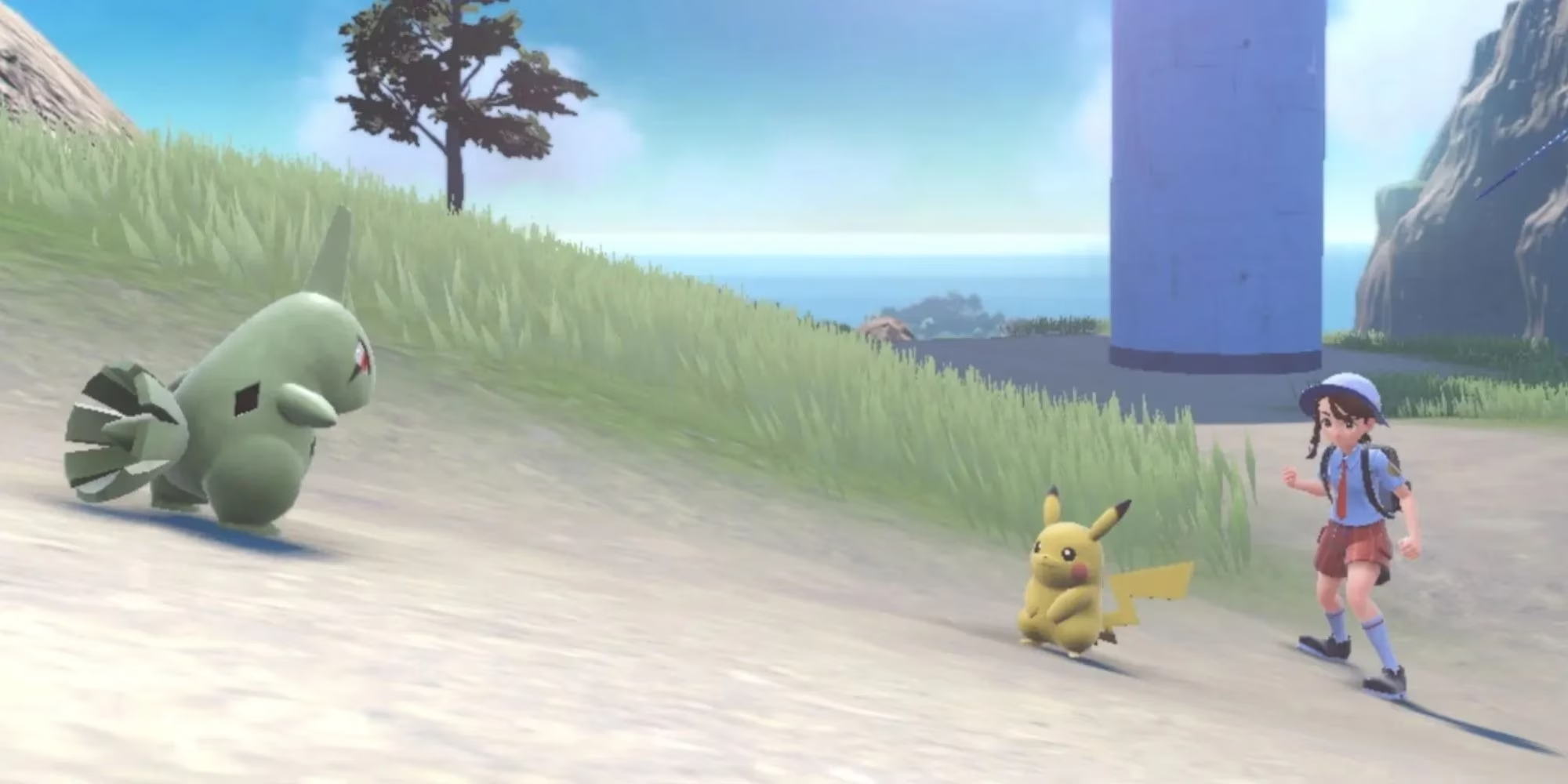
If you’d told me in 2022 that Pokémon would be the poster child for technical disaster, I would’ve laughed. But then Pokémon Scarlet & Violet dropped, and the laughter turned to horrified gasps. Frame rates would nosedive, Pokémon centers rotated like glitchy PS1 textures, and memory leaks crashed my game during critical battles. What infuriated me wasn’t just the poor optimization—it was the wave of apologists blaming the Nintendo Switch hardware. Eric Switzer’s feature at the time was a breath of fresh air, pointing out that Breath of the Wild and Xenoblade Chronicles 3 ran beautifully on the same system. The truth was, Game Freak had rushed an unfinished product. Now, in 2026, I look at the subsequent mainline Pokémon releases and see that the lesson was half-learned: performance is better, but still not where it should be for a franchise that prints money. The Switch 2 is here now, and yet part of me still fears the next generation will once again ignore proper QA.
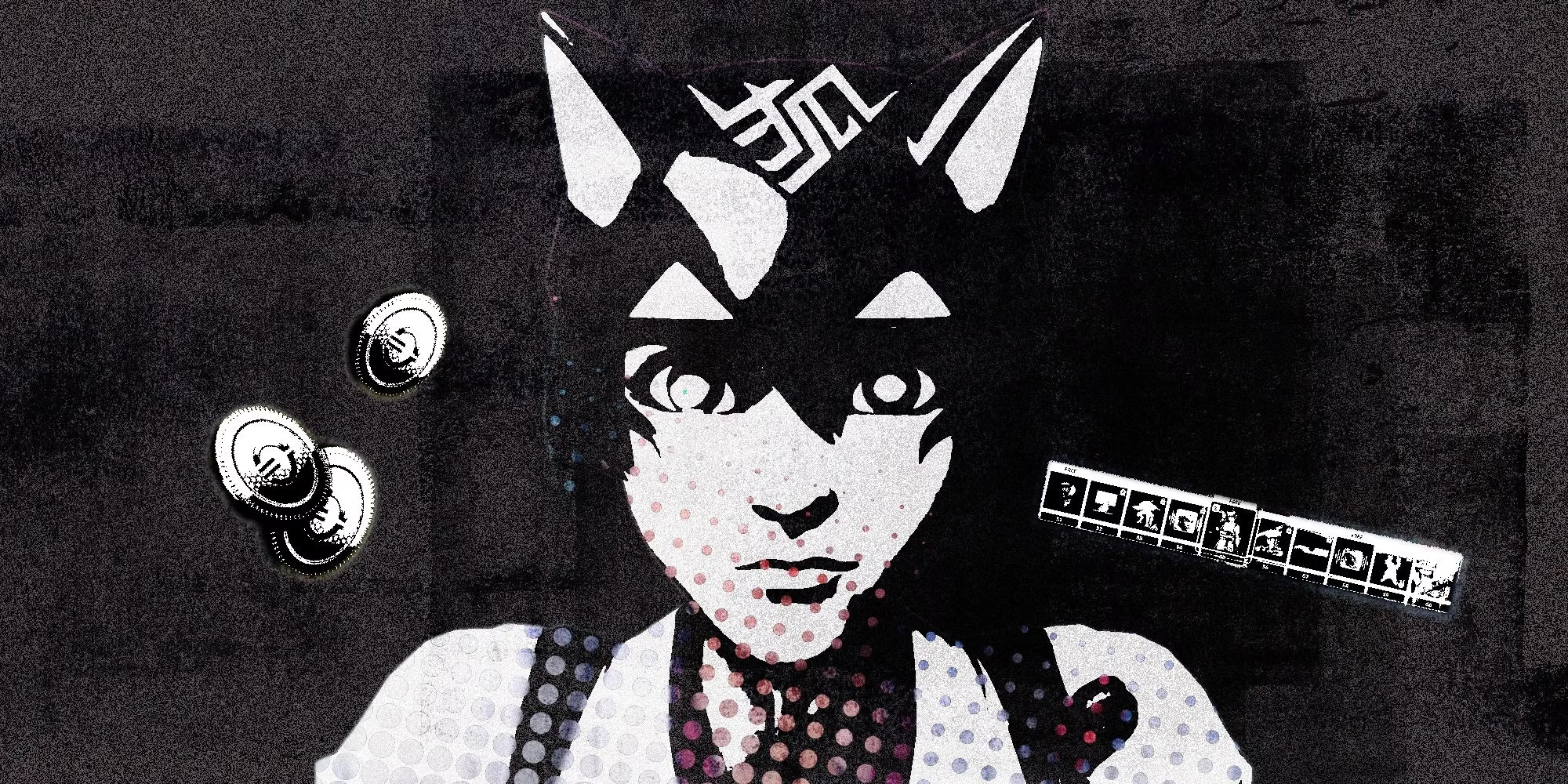
Live-service games were already a sore spot in 2022, but Overwatch 2 stomped right on the bruise. I had been a huge fan of the original Overwatch, pouring hundreds of hours into its vibrant, team-based chaos. When the sequel finally launched as a free-to-play title, I was cautiously optimistic. That optimism died within weeks. The progression system felt gutted, new content trickled in at a glacial pace, and the genuine joy of earning loot boxes was replaced by a predatory battle pass. Jade King’s critique that Overwatch 2 was failing us as a live service hit hard—especially when compared to Fortnite’s constant evolution and Apex Legends’ inventive updates. Half a decade later, Overwatch 2 has clawed back some goodwill with overhauls and PvE expansions, but it never recaptured the magic. It remains a cautionary tale of how not to transition a beloved IP to the live-service model.
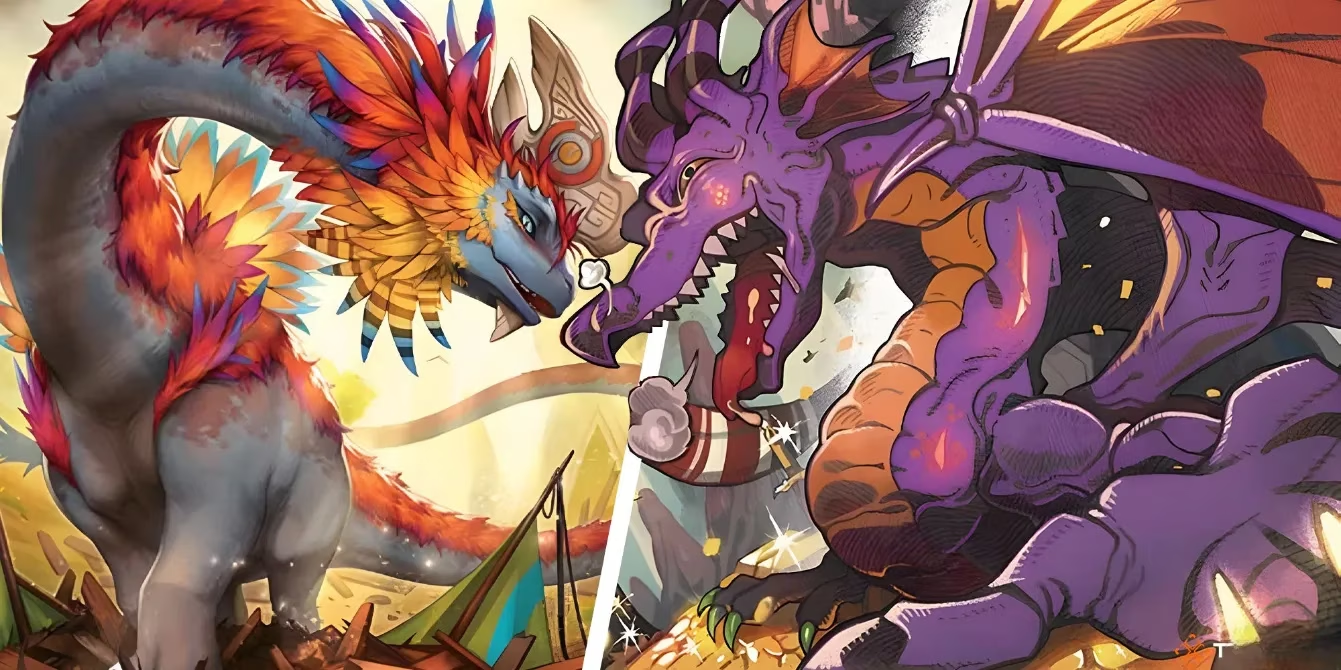
Finally, I have to mention the horny elephant in the room: Magic: The Gathering’s Jumpstart 2022 set. I’m a casual tabletop player, and when the manga-inspired art dropped, I expected stylish, whimsical reinterpretations of classic cards. Instead, I got Rapacious Dragon—a name that was apparently a direct challenge to the artist to draw the most suggestively posed fire-breathing lizard imaginable. Joe Parlock’s feature was a hilarious read, perfectly articulating why the set veered too hard into fanservice territory. In 2026, Wizards of the Coast has mostly reined in the extreme designs, but that era will forever be remembered as the time when a trading card game made me genuinely embarrassed to play it in public.
So here I am, four years older, still gaming daily. The titles from late 2022 served as a strange time capsule—a mix of artistic triumph, corporate nonsense, and technical fiascos that pushed the community to demand better. Some things improved; others are still broken. But if there’s one constant, it’s that we’ll always have something to complain about—and honestly, I wouldn’t have it any other way.