Roadhog's Overwatch 2 rework ignites passionate debate, as new Pig Pen trap and healing changes polarize the fanbase in 2026.
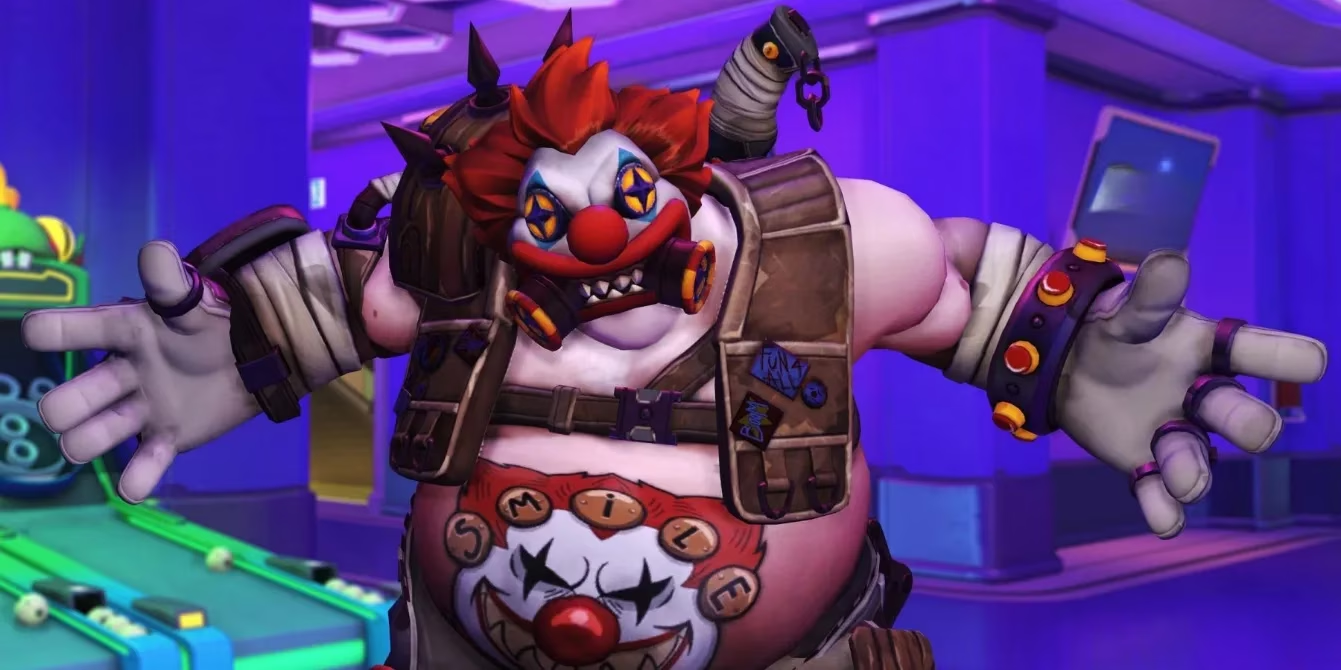
The year 2026 sees the Overwatch 2 community still grappling with the legacy of a long-awaited change. After a year of anticipation and several delays, Roadhog's comprehensive kit rework finally went live, but instead of unifying players, it has cleaved the fanbase into passionate factions. The hero, once known as the lethal bodyguard to Junkrat and the terror of the hook-and-shot combo, now stands as a symbol of debate. His new arsenal, featuring the controversial Pig Pen trap and a revamped Take a Breather, has sparked heated discussions about whether Blizzard successfully evolved the tank or stripped him of his iconic, brutal identity.
🔧 The Anatomy of the Rework
The patch notes, as detailed by community members, revealed a significant shift in Roadhog's playstyle. The core changes can be broken down into three key areas:
| Ability | Old Function | New Function (Post-Rework) | Community Sentiment |
|---|---|---|---|
| Scrap Gun | Primary fire + Secondary fire (mid-range burst) | Primary fire only; secondary fire removed. | ⚠️ Highly Controversial - Seen as a damage nerf and loss of skill expression. |
| Take a Breather (Heal) | Stationary self-heal, damage reduction. | Mobile healing, provides damage mitigation aura for nearby allies. | 👍 Mostly Positive - Adds team utility and strategic depth. |
| New: Pig Pen | N/A | Throws a trap that damages and slows enemies in an area. | 🤔 Mixed Reactions - Praised for zone control, criticized for adding more "slow" effects to the game. |
| Chain Hook | Pulls and stuns a single enemy. | Functionally similar, but combo potential adjusted due to Scrap Gun changes. | 🎯 Debated - The "cheeky hook" kill is harder but still possible with trap setup. |
🗣️ The Chorus of Criticism
For many veterans, the rework felt like a betrayal of Roadhog's core fantasy. The removal of the Scrap Gun's secondary fire was a particular point of contention. Players lamented the loss of what they considered a skillful tool for securing precise, mid-range damage. One disgruntled fan compared the change to "removing the scalpel from a surgeon and handing them a mallet" – it gets the job done but with far less finesse. The fear was that without this tool, Roadhog's overall damage output would plummet, making him less of a threat and more of a bullet sponge, or as one Redditor starkly put it, "even more squishy."
The introduction of the Pig Pen ability also drew skepticism. In a game already saturated with crowd control, adding another slowing effect felt to some like "sprinkling salt on a wound that hasn't healed." Critics argued it contributed to a frustrating gameplay loop rather than solving Roadhog's fundamental issues of survivability and counterplay.
✨ A Glimmer of Optimism
However, not all voices were raised in dissent. A dedicated contingent of Roadhog mains greeted the changes with cautious optimism. They pointed to the transformed Take a Breather as a game-changer. No longer a purely selfish ability, it now allows Roadhog to become a mobile bastion for his team, mitigating damage for allies during pushes. This shift turned him from a lone-wolf brawler into a more traditional, space-creating tank. One supportive player noted that this change finally gave Roadhog a reliable tool to mitigate the influence of Ana, his historical nemesis whose Biotic Grenade could completely shut down his old heal.
These players saw the new kit as a puzzle to be solved. The combination of the Pig Pen and the Chain Hook created new, strategic possibilities for area denial and catching enemies off-guard. The playstyle evolved from a pure execution to a more tactical setup, where trapping a choke point or combining the slow with a hook could secure kills in a way that felt clever rather than brute-force.
📜 The Legacy of Reworks
Roadhog's transformation is not an isolated event in Overwatch 2's history. It follows in the footsteps of other major hero revamps, most notably Sombra's rework, which also initially divided players before finding its niche. These changes reflect Blizzard's ongoing struggle to balance iconic, sometimes problematic, hero designs with the evolving demands of a 5v5 format and modern shooter sensibilities.
In 2026, the debate continues. Has Roadhog's rework been a success? The metrics are mixed:
-
Win Rate: Saw an initial dip, followed by a gradual climb as players mastered the new kit.
-
Pick Rate in Professional Play: Moderate; used as a situational counter-pick rather than a meta staple.
-
Community Perception: Remains polarized. He is no longer the universally feared solo killer, but has gained appreciation as a more team-oriented tank.
Ultimately, time has shown that the rework did not kill Roadhog but reinvented him. He became a hero less about landing a single, devastating combo and more about controlling space, enabling his team, and outsmarting the enemy with well-placed traps and timely damage mitigation. For some, this is a loss of what made him fun. For others, it's a welcome evolution that granted him new depth and relevance. Like a stubborn stain on the fabric of the game's history, the debate over the Hog's new look is one that may never fully fade, a testament to the powerful connection players form with their favorite heroes.