Overwatch 2 and Hero Mode reveal Blizzard's shift from PvE storytelling to a free-to-play monetization strategy, impacting loyal fans.
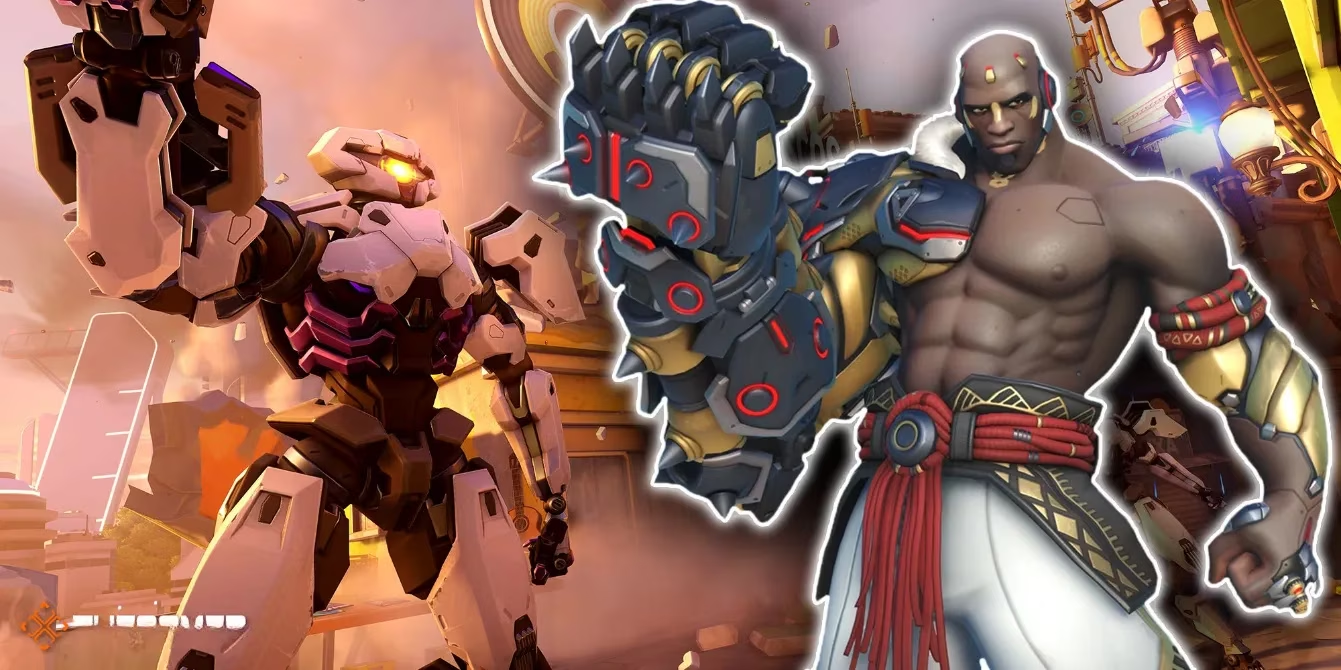
It was November 2019. Inside the Anaheim Convention Center, thousands of fans erupted as Jeff Kaplan stepped onto the BlizzCon stage to reveal the next evolution of Overwatch. The cinematic trailer teased a full-blown cooperative campaign, complete with character progression, talent trees, and missions that promised to expand the lore of heroes like Tracer, Reinhardt, and Mei. This was Hero Mode, marketed as the centerpiece of Overwatch 2. Four years later, the dream is dead. Game director Aaron Keller and executive producer Jared Neuss confirmed in a 2023 interview that Hero Mode had been cancelled. The sprawling PvE saga was too ambitious, they said, too time-consuming, and it drained resources from the live PvP service. By 2026, the fallout is still being felt, and the question lingers: was Overwatch 2 ever really about PvE?
The signs were there from the start. When Blizzard announced in late 2022 that Overwatch 2 would launch without the PvE campaign, confusion rippled through the community. How could a sequel omit its defining feature? The answer arrived quickly once players logged in. The 6v6 format had been replaced by 5v5, several maps were reworked, and new heroes like Sojourn and Kiriko were locked behind a battle pass. The core loop was essentially the same competitive shooter, but the economy had been gutted. Loot boxes vanished, replaced by a premium shop and a seasonal battle pass that charged for cosmetics once earned through simple gameplay. In that moment, the true purpose of Overwatch 2 crystallized: it was never about cooperative storytelling. It was a vehicle to transition a buy-to-play game into a free-to-play monetization machine.
Why would Blizzard build a sequel if not for PvE? The answer requires rewinding. By 2018, the original Overwatch had become a cultural phenomenon, but its revenue was tapering off. Players had amassed thousands of loot boxes without spending a dime. For Activision Blizzard, this was a problem. The solution? Rebrand, relaunch, and re-monetize. Hero Mode provided the perfect justification—an ambitious announcement that would make the sequel feel necessary. Internally, however, the PvE project was always a sideshow. Keller and Neuss later admitted that the team tried to build Hero Mode as an almost separate game, yet they could never reconcile its development with the demands of maintaining a live-service shooter.
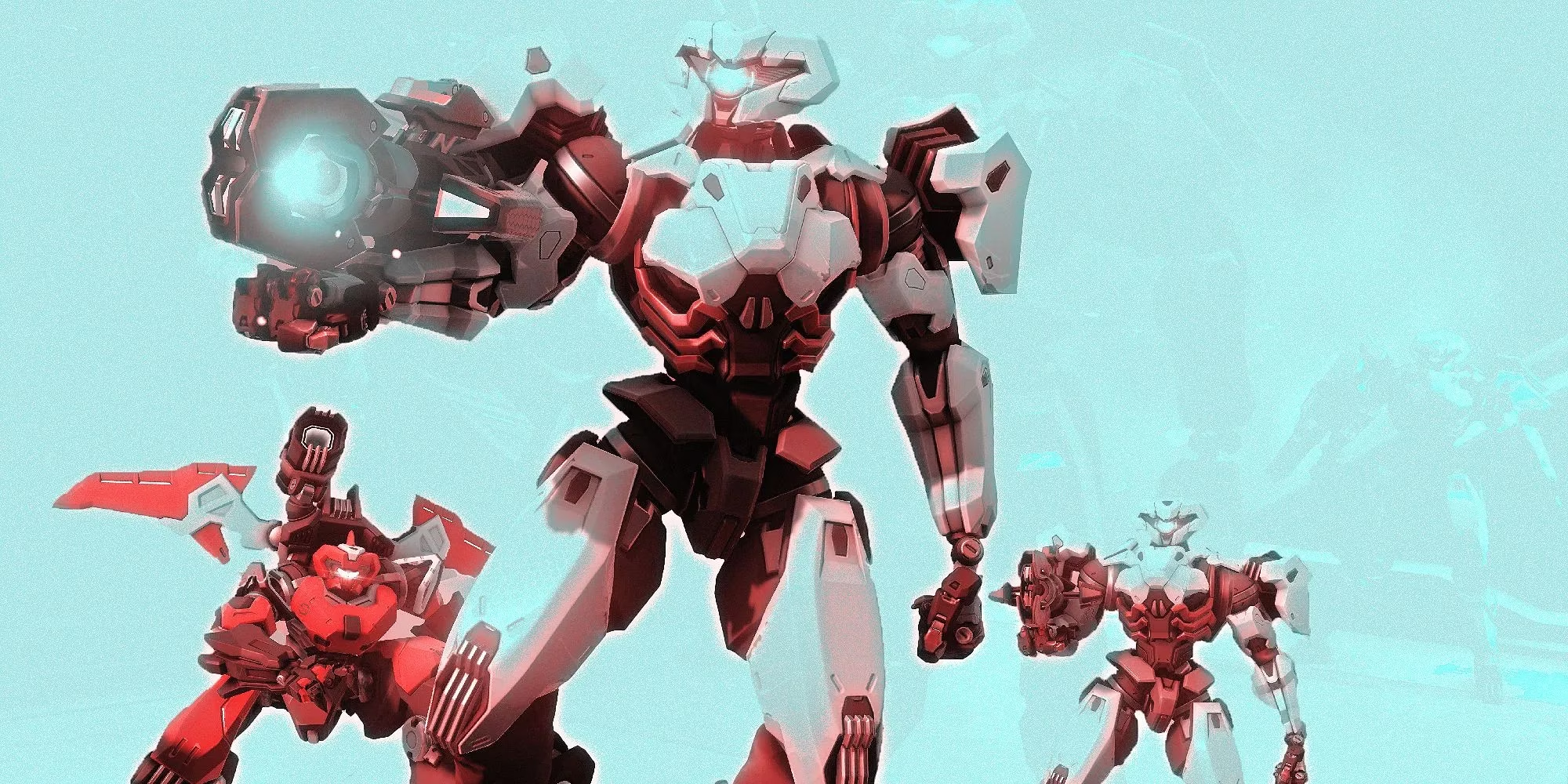
What about the players who endured the content drought? For two agonizing years, from 2020 to 2022, the original Overwatch received no new heroes, no meaningful updates, and radio silence from the developers. The community held on, trusting that the silence meant focus—that Blizzard was pouring every resource into the grand PvE vision shown at BlizzCon. Streamers repeated the mantra: “Just wait for Overwatch 2.” When the sequel finally arrived, it was a stark realization. The long wait had been for a battle pass, a mythic shop, and a fundamental restructuring of how money flowed. The promised Hero Mode talents and progression systems? Gone. In their place came small, episodic PvE missions sprinkled into seasonal events—a faint echo of what could have been.
Here, a painful truth surfaces. Overwatch 2 didn’t fail to deliver Hero Mode because of technical hurdles alone. It failed because the project was never the priority. Blizzard needed a sequel to reset expectations around spending. Consider the timeline: the original Overwatch launched as a $40 title with free maps and heroes. Overwatch 2 dropped the price tag but gated new characters behind battle pass tiers (a practice partially walked back after outcry). Skins that once cost 3,000 legacy credits now demand premium coins worth $20 or more. The shift was designed to exploit FOMO and whale psychology, a far cry from the generous post-launch support players had come to love.
Is it fair to call this a betrayal? That depends on where you stand. For the casual observer—someone who never touched Overwatch—the “2” might seem meaningless without PvE. But for the veterans, the cancellation of Hero Mode merely confirmed what many already suspected. The sequel’s existence was a corporate maneuver, not a creative expansion. Even the shift to 5v5, often praised for faster gameplay, served an unspoken purpose: it reduced queue times and simplified balance, making the game more accessible for a broader, higher-spending audience.
By 2026, what remains of Hero Mode is a handful of story missions, released sporadically and buried under event-limited menus. The talents that once promised deep customization were scrapped entirely. Blizzard has since added new modes like Flashpoint and Push, and the esports scene limps onward. Yet the specter of what was lost haunts every developer update. Each season brings a new hero and a set of unlockable cosmetics, but the soul of Overwatch—the feeling of being part of a cooperative world—has faded into a skin marketplace.
The lesson in all this? When a publisher rolls out a sequel to an aging live-service game, look beyond the flashy trailers. Ask who benefits from the refresh. More often than not, the “2” is a financial reset button, not a creative rebirth. As one disillusioned fan put it on a forum in early 2026, “They didn’t need Overwatch 2 for PvE. They needed it to make us pay again.” Hero Mode might be gone, but the conversation it sparked about corporate greed remains sharper than ever. Instead of wondering when Blizzard will drop the “2,” perhaps we should worry about when they’ll try to slip in a “3.”
Next: The lingering impact of Overwatch 2’s monetization on player trust.